27 May 2009

Systematic Theology--Lesson 7, Salvation (part 4)

What is salvation? What does it mean? I tried to come up with a suitable definition a while back, and this was what I came up with:
Salvation is the restoration of a right relationship between God and a man.
Not God and man—but God and A man. An individual. Salvation is not universal. The relationship between God and man—all of mankind—has not been restored. All of mankind, in their natural state, is set against God. When God created Adam, he had a perfect relationship with God. There was nothing to separate them. In fact, both Adam and Eve walked and talked with God. But then something—someone—led them away from God, and from that point on, even until now, man is separated from God by sin and death. This took God completely by surprise. “Oh no! What ha-happened!! Oh, how am I ever going to fix this?” Right? Isn't that how the liberals and emergents would have you believe? Of course, these are fools. Sorry, there's no other way to say it.

But this did NOT take God by surprise, and that’s why Christ is referred to as the Lamb slain from the foundation of the world. He was slain for those whose names had been written in the Book of Life. He was slain so His blood could cover the sins of those who would believe before He physically came to earth. Kinda like postdating a check. They had the promise of redemption, and when Christ came He made good on it. That is why Jesus told the Pharisees, “Your father Abraham rejoiced to see My day, and he saw it and was glad” (John 8:56). Abraham saw this day, he saw the day when Christ would come to earth, and he rejoiced because he knew God the Son would enter into the Most Holy Place in the heavens with His blood, to atone for the sins of those who not only had already died believing the promises of God, and for those yet to come.

To forgive the sins of those whose names were written in the Book of Life of the Lamb. This brought all those things we talked about last time. But none of those would be possible without the forgiveness of sins. We would still be dead in our sins; we would still be in the kingdom of darkness, and would still be enslaved to sin. We would still be God’s enemy. And it’s only through Christ that we have this forgiveness of sins. There is no way, no how, that we could ever pay the debt that we owe. And that’s why we must never miss and must never, ever compromise on what the cross was all about. It was not so that we could drive a fancy car and always have good health!!! It was because we were enemies of God, and because we owed a debt we could not pay. And the cross was the only way to pay off that debt, and restore our relationship with God.

See, here’s the thing. Even though we are born dead to God, even though we hate Him and reject Him at every turn, we still have the ability to do “good” things. “Wow, that Mr. Jingleheimer. He does so many good things. There’s got to be a special place in Heaven for him.” If he has accepted Christ as his Savior—there is. But if Mr. Jingleheimer has never asked the Lord to forgive his sins, has never called upon the name of Christ, and is depending on his own vile, filthy works of flesh to make him righteous before God—then his place is not going to be in Heaven. That’s not my idea. That’s the clear word of Scripture. Because without forgiveness of sins, there is no way for a person to enter into the Kingdom of God. Period, paragraph. Psalm 130:3-8If You, YHVH, should mark iniquities, O Lord, who could stand? But there is forgiveness with You, that You may be feared. I wait for YHVH, my soul waits, and in His word I do hope. My soul waits for the Lord more than those who watch for the morning…O Israel, hope in YHVH; for with YHVH there is mercy, and with Him is abundant redemption. And He shall redeem Israel from all iniquities.

Remember in the gospels, those four men brought their friend to Christ—their friend to who was bedridden with the palsy—they couldn’t get in the house, so they went up to the roof, tore off the shingles, and let down his bed through the hole. When Jesus saw their faith, He said, “You need healing! Be healed!” Right? No? Well, what did He say? “Thy sins are forgiven thee.” Kind of an odd thing to say. In fact, when the Pharisees heard this they hollered, “Only God forgives sins! This man blasphemes!” Which is kinda strange if Jesus never claimed to be God. But that’s why Christ came—to forgive sins. Even that was only a part of His main goal. His main mission was not to heal, or to give sight to the blind or to heal lepers—and it sure as heck was not to heal our bank account! Those things were part of His main goal which was what? To glorify the Father. Christ could have gone around giving sight and healing lepers until the end of the age. But we would still be plagued by the curse of sin.

See, the problem we humans have is not sickness, or poverty, or disease, or anything like that. Those are only symptoms. Just like sniffling, sneezing, coughing, aching, stuffy head, fever are only symptoms of a cold. We can chug Nyquil™ on the 8’s for a month. But until we get rid of our cold, we’re still going to have sniffling, sneezing, coughing, aching, stuffy head, fever. And as long as there is still sin in this world, there will always be sickness and poverty and disease and death. I don't normally quote from paraphrases, and when I do I'm very careful about it. But I do like how the New Living Translation renders Romans 8:20-24Everything on earth was subjected to [the] curse. All creation anticipates the day when it will join God's children in glorious freedom from death and decay. For we know that all creation has been groaning as [if] in the pains of childbirth right up to the present time. And even we Christians, although we have the Holy Spirit within us as a foretaste of future glory, also groan to be released from pain and suffering. We, too, wait anxiously for that day when God will give us…the new bodies he has promised us. Now that we are saved, we eagerly look forward to this freedom.

It is sin that separates us from God. It is sin that causes sickness and poverty and disease and death. And only when all things are made new will those things be done away with. Even we believers in Christ will always deal with these things. But, with forgiveness of sins—and only by the forgiveness of our sins—God can allow us into His kingdom, and we can be truly healed—not in this world, but in the age to come. Habakkuk 1:13You are of purer eyes than to behold evil, and cannot look on wickedness. Psalm 5:4-5For You are not a God who takes pleasure in wickedness, nor shall evil dwell with You. The boastful shall not stand in Your sight; You hate all workers of iniquity. Forgiveness. Without it, we cannot be brought to life, we cannot be reconciled to God, and we cannot be redeemed from the kingdom of sin.

Next, Justification. This is another biggie. Because justification goes hand-in-hand with forgiveness. Because we are forgiven of our sins, we are justified in the eyes of God. Romans 4-5 are two of the clearest chapters on justification. First, let me throw out a definition for you. Easton’s Bible Dictionary defines justification like this:
It is the judicial act of God, by which he pardons all the sins of those who believe in Christ, and…treats them as righteous in the eye of the law, i.e., [treats them] as being conformed to all its demands. In addition to the pardon of sin, justification declares that all the claims of the law are satisfied in respect of the justified…The law is not relaxed or set aside, but is declared to be fulfilled in the strictest sense; and so the person justified is declared to be entitled to all the advantages and rewards arising from perfect obedience to the law.
Romans 5:1Therefore, having been justified by faith, we have peace with God through our Lord Jesus Christ. If I rob a liquor store—put a gun to the clerk’s head, they hand over a bag of money, I run out of the store—and right into a police officer. He arrests me, puts me in jail, I go to trial. Here’s the thing. I am guilty. I committed a crime. No doubt about it. But if I can find a good lawyer, or if some of that evidence gets thrown out on a technicality, I can walk out of that court room a free man. The world knows I committed that crime. I know I committed that crime. I did it. But I don’t get punished for it. In fact, nobody gets punished for it. The requirements of justice are not met.

When we sin, we break God’s law. 1st John 3:4 (KJV)sin is the transgression of the law. And when we sin, we are in the full sight of God. There’s nothing He does not see. Hebrews 4:13 (NASB)And there is no creature hidden from His sight, but all things are open and laid bare to the eyes of Him with whom we have to do. We sin, He sees it—there must be punishment for those sins. God’s justice demands it. His court is not like man’s court. There is no getting off without some payment being made to the one who was wronged—and who is it that was wronged? Psalm 51:4against You, and You alone have I sinned. Who decides what the payment will be? Will He have mercy on a person if they stand before Him and they still owe their debt? And when they do stand before God, there will be no lawyer anywhere who can argue against God, and in fact, their fate is already sealed. You see, unlike our courts, there are no technicalities. There are no fancy maneuvers to get a person out of their sentence. None of the evidence will be suppressed. There are no appeals. The verdict will be read, the sentence will be passed. None of His verdicts are overturned. They will be cast, without mercy, without pity, without a second thought, into Hell. And it is fair. Romans 3:19Now we know that whatever the law says, it says to those who are under the law, that every mouth may be stopped, and all the world may become guilty before God. Anyone who stands before the Great White Throne will be judged by the Law.

In Revelation 20, it says that books were opened and another book, which is the Book of Life. I believe that “the books”—and this ain't a hill I'm gonna die one--I believe one of these books will be their works, one will be their sins, and the other will be the Book of the Law. And then the Book of Life will be laid out. And anyone whose name is not found in the Book of Life… But, let me tell you why the gospel is gospel. We have committed all these sins. There is no doubt about it. We did it, God saw it, they must be punished. But as Christ hung on that cross, God was justifying us, forgiving us of our sins, and Christ on that cross took the punishment we deserved. We deserved the wrath of God—but God provided a lamb for His burnt offering. He gave His Son to shed His blood on the mercy seat of the cross. He shed His blood so that death would pass over us. 1st Corinthians 5:7Christ, our Passover, was sacrificed for us.

And because He was punished, we aren’t. We are declared “Not guilty” and we are released from judgment. We are justified—how? Therefore we declare that a man is justified by… Romans 3:28, Romans 5:1; Galatians 2:16, Galatians 3:11, Galatians 3:24. All these are very clear, that a man is justified by faith. That when we believe, when we repent from sin and we trust in Christ alone as the one who justifies us, God declares us justified. He declares that we have kept all of the righteous requirements of the Law. “What do you mean? You said that we are all sinners, and now you're saying God declares that we have kept the righteous requirements of the Law? How does He do that?” There’s one last term we need to look at. It’s called “Imputation.”

2nd Corinthians 5:19-21Now all things are of God, who has reconciled us to Himself through Jesus Christ…God was in Christ reconciling the world to Himself, not imputing their trespasses to them…we implore you on Christ's behalf, be reconciled to God. For He made Him who knew no sin to be sin for us, that we might become the righteousness of God in Him. Romans 4:5-8But to him who…believes on Him who justifies the ungodly, his faith is accounted for righteousness, just as David also describes the blessedness of the man to whom God imputes righteousness apart from works: Blessed are those whose lawless deeds are forgiven, and whose sins are covered; blessed is the man to whom the LORD shall not impute sin. Romans 4:22; James 2:23 both talk about Abraham’s faith being imputed to him as righteousness.

And you know, I had been thinking about that concept. That Abraham believed God, and it was counted for righteousness—he was declared righteous simply because he believed a promise. But here’s why I think this is so. We need to go all the way back to the beginning. Who committed the first sin? Adam. What caused him to commit that sin? He believed a lie. What was that first lie? “Hath God indeed said?” And believing this lie caused Adam and Eve to do what? They doubted God’s word—even though Adam had seen the work of God. But Abraham believed without seeing. What did Jesus tell Thomas after He told him to put his fingers through the nail prints, and Thomas cried out “My Lord and my God,” what did Jesus tell him? “You believe because you have seen, blessed is he who…believes without seeing.”

So many people say, “Oh, if I could only see Jesus, I know my faith would be so much stronger!” No it wouldn’t! If someone has to see Christ in order to believe Him, they don’t have much faith to begin with! Because it’s almost as if they are asking, “Hath God indeed said?” But when we believe, and we continue believing, God imputes Christ’s righteousness to us. To put something into someone’s account. Adam’s sin was imputed to us. Our sins are imputed to Christ. Christ’s righteousness is imputed to us. According to the International Standard Bible Encyclopedia,
It is not meant that Adam's sin was personally the sin of his descendants, but that it was set to their account, so that they share its guilt and penalty. It is not meant that Christ shares personally in the sins of men, but that the guilt of his people's sin was set to his account, so that He bore its penalty. It is not meant that Christ's people are made personally holy or inwardly righteous by the imputation of His righteousness to them, but that His righteousness is set to their account, so that they are entitled to all the rewards of that perfect righteousness.
It’s kinda like this: If I'm in Argentina, and I need money, I call my friend. I say, “Richard, can you wire me some money?” He goes to Western Union, says “I want to wire $1000 to a Mr. Wood in Argentina.” Does the person on Richard’s end of the wire roll up those bills and physically stick the money through the telegraph wires? What they do is they tell the person on the other end, “There is a Mr. Brittain here, and he has given me $1000 that I need you to impute a Mr. Wood in Argentina.” They take that $1000 that Richard gives them, and they credit—they impute—that money to me.

Adam’s sin is imputed to us; it is credited to us, when we are born. So we start off with a debt—even before we take our first breath. Let’s say.....about $80 billion. Conservative estimate. Probably higher than that. Every time we sin—murder by hatred, adultery by lust, stealing, coveting, etc. We continue to pile up debt every single day of our life. So before we even realize it, our debt has grown from $80 billion to around, let’s say, ballpark, $100 trillion. Now, in order to get into Heaven, we need to have one thing—and only one thing. We need to have the righteousness of God. That’s all you need! All you need to get into Heaven is the righteousness of God!

Ooooohhh.....problem.

How many of us have the righteousness of God? Yeah, pretty much. Well, now, wait. There is one in Heaven Who does have it. Who is that? So we’re going to put a 1 underneath Christ’s side of the ledger, to show that He is the only one who is worthy of entering into the presence of the Father. Ain't lookin’ too promising for us. But here, my friends, is imputation. Watch this transaction. When He saves us, when He calls us, and we respond, we repent—turn our back on—sin, and we trust in Christ as Abraham believed the promises of God and it was counted as righteousness—He takes this $100 trillion debt and places it into Christ’s account. And He takes the righteousness of God, and places it into our account. Christ redeems us from the curse of sin by becoming a curse for us, He saves us from our sins by becoming sin for us, and we receive the righteousness of God that was in Christ as God was reconciling us to Himself through the cross.

God is so unfair!

26 May 2009

Two in a row for the 'Cuse!


How 'bout that Syracuse Lacrosse!!! Showing the heart of the champions they are, they overcome a 3-goal deficit in the last 3 minutes, tie the game with 0:04 left in regulation, and win an overtime thriller over Cornell.
Foxboro, Mass. - The legend grows.

The Syracuse University men's lacrosse team, down three goals with four minutes to play and the ball in Cornell's possession, staged an unlikely, incredible four-goal rally Monday afternoon to defeat the Big Red 10-9 and win its second consecutive Division I national championship on Cody Jamieson's crease shot off a pass from Dan Hardy 1 minute, 20 seconds into sudden-death overtime.

"As soon as I shot it didn't even look. I just started running (the other way in celebration)," Jamieson said. "I knew it was in."

The climax came after senior attackman Kenny Nims sent the game into OT with a lunging wrap-around goal with only 4.5 seconds remaining in regulation in front of a Gillette Stadium Memorial Day crowd of 41,935 and a national television audience.

"I'm just speechless," said Nims, whose lone goal was enough to earn him honors as the game's Most Outstanding Player.

It was fitting, because in this case deeds spoke louder than words.

Full story here

Gallery of images:

Syracuse Post-Standard


The Washington Times:


The Bleacher Report:


22 May 2009

Systematic Theology--Lesson 7, Salvation (part 3)

Salvation. We’ve been talking about it now for three weeks. We've seen where it comes from, who begins it, who saves us, how we are saved. We have seen all these things. But what do they mean? I mean, I’m saved—now what? Do I go about living my life as if nothing happened? Do I have to be always afraid that if I make one false step that I will be cast out of the kingdom of God? When it comes to salvation and what it means, we could come up with a thousand questions. Can I lose it? Oh, I can answer that one real quick—ABSOLUTELY NOT!!

There are some systems, some organizations that will tell you that outside of their group there is no salvation. That if you do not belong to this particular man-made group, you cannot be saved. The Roman Catholic system makes that claim, the Church of Jesus Christ of Latter-Day Saints, the Watchtower Bible and Tract Society. Let me make this abundantly clear. Salvation does not come about by joining a particular “church.” Even this one. Salvation is a work of God. Period. I cannot save anyone. This church cannot save anyone. It is God who works in a person’s life to bring their dead spirit to life, to make that person righteous in His eyes, to redeem them from the kingdom of death and into the kingdom of God’s dear Son, to reconcile that lost sinner who wanted nothing to do with God, and it is only by His grace that he forgives sins so that He might make us able to enter His rest.

We begin today by discussing The Particulars of Our Salvation. What is involved in our salvation? How does God save us? First, by Regeneration. Our pastor calls this, "A secret act of God in which He imparts new spiritual life to us." He has to! He has to breathe life into us because we are dead. We are born dead. When God warned Adam about eating from the tree in the Garden, He said “In that day you shall die.” The Hebrew literally means, “Dying, you will die.” Basically, God was telling Adam that if he ate of that tree, he would begin to die—not only physically, but spiritually as well. Did he die physically that day? Well, yes, in a way. He started to die--he began the dying process; cells in his body began to die. That death is passed on to all of us. Ephesians 2:1; Colossians 2:13 both tell us that we were dead in trespasses and sins. We are dead. We are born dead.

But when God sets out to save a person, the first thing He does is breathe His Spirit into that person to bring their dead spirit to life. Because He sees a person that has done so many wonderful things and so many good works that he has no choice but to save them, right? Uh...yeah. Titus 3:3-5For we ourselves were also once foolish, disobedient, deceived, serving various lusts and pleasures, living in malice and envy, hateful and hating one another. But when the kindness and the love of God our Savior toward man appeared, not by works of righteousness which we have done, but according to His mercy He saved us, through the washing of regeneration and renewing of the Holy Spirit. We are regenerated, brought to life by the Holy Spirit. Check out what the verses following Ephesians 2:1 and Colossians 2:13 have to say. Ephesians 2:4-5He loved us, even when we were dead in trespasses, [and] made us alive together with Christ. Colossians 2:13He has made [you] alive together with Him, having forgiven you all trespasses. Ezekiel 36:25-28“Then I will sprinkle clean water on you, and you shall be clean…I will give you a new heart and put a new spirit within you; I will take the heart of stone out of your flesh and give you a heart of flesh. I will put My Spirit within you and cause you to walk in My statutes, and you will keep My judgments and do them…you shall be My people, and I will be your God.” Notice what God says here. I will cause you to walk in My statutes.” We don’t just decide one day to follow His laws. He causes us to do them!

Why does He do that? Because He HAS TO in order for us to follow them! That’s why He brings our dead spirit to life—so that we can walk in a way that pleases Him. Regeneration. Next is Redemption. Where do we usually see the word “redeem?” Coupons. When I redeem my coupon for 25 cents off a loaf of bread, what do I do? I hand a little slip of paper to the grocery clerk and that clerk removes 25 cents from the price of that loaf of bread. When we talk about biblical redemption, it’s kinda the same, but a bit different. When we are born, we were under the curse of the law. Every single person, Jew or Gentile, when we are born we are born under the law of sin and death. Whose law? God’s law. We owed a debt to God. Why do we owe that to God? Because of our sins. If that debt is not paid in this life, what will the payment be? Eternal punishment in Hell. It will be paid one way or the other. No way around it.

When Jesus died on the cross, He died, He ascended to Heaven, He entered the Most Holy Place in the heavens with His own blood. That blood removed from us the penalty we were due—but only for those who believe. Christ offered His blood to the Father, and--contrary to what the Roman Catholic will tell you, contrary to what the LDS will tell you, contrary to what the Jehovah's Witnesses will tell you--He didn’t just knock a few dollars off of our debt. His blood completely removed from us the price tag that was on our heads—the handwriting of ordinances against us—that price tag was given to the Father, and He destroyed it. No, you're right--God isn't fair! Ephesians 1:7In Him we have redemption through His blood, the forgiveness of sins, according to the riches of His grace. 1st Peter 1:18-19you were not redeemed with corruptible things, like silver or gold… but with the precious blood of Christ, as of a lamb without blemish and without spot. Galatians 3:13Christ has redeemed us from the curse of the law, having become a curse for us. Galatians 4:3-5When we were children, were in bondage under the elements of the world. But…God sent forth His Son…to redeem those who were under the law, that we might receive the adoption as sons. Titus 2:14—[Christ] gave Himself for us, that He might redeem us from every lawless deed and purify for Himself His own special people, zealous for good works. Christ offered His blood to the Father as payment for our eternal spirit, that He might remove from us the price tag of eternal Hell. It’s not fair.

Next, Reconciliation. We hated God. Period. There’s no, “Well, I haven’t really made up my mind yet.” A person either loves God or hates God. Period. If someone hasn’t made up their mind—then they have made up their mind. And because we hated Him, He counted us as His enemy. Romans 8:7-8The carnal mind is enmity against God…those who are in the flesh cannot please God. James 4:4Friendship with the world is enmity against God. But, guess what God did? He sent His Son. Think about that. If I broke into someone’s house, stole their TV and their stereo, poured lighter fluid on everything and set it on fire. Became their enemy. They come to me, wanting to reconcile our relationship. I ask them, “Well, what can I do?” They tell me there’s nothing I can do. The only way to reconcile the two sides is for them to allow their son to die. “No, no! There has to be some other way!” No, there is no other way. Their son has to die. That’s what God did. We broke into His house, stole His stuff, set His stuff on fire—but He allowed His Son to die to pay for our actions.

There is nothing we can do to repair our relationship with God. Except to believe that He has done everything that needs to be done by allowing us sinful humans to put His Son to death. He sacrificed His Son for our lawless deeds. God is not fair. Colossians 1:19-21For it pleased the Father that in Him all the fullness should dwell, and by Him to reconcile all things to Himself, by Him, whether things on earth or things in heaven, having made peace through the blood of His cross. And you, who once were alienated and enemies in your mind by wicked works, yet now He has reconciled in the body of His flesh through death, to present you holy, and blameless, and above reproach in His sight. Romans 5:10-11For if when we were enemies we were reconciled to God through the death of His Son, much more, having been reconciled, we shall be saved by His life. And not only that, but we also rejoice in God through our Lord Jesus Christ, through whom we have now received the reconciliation.

We did not want to make peace with God. And if He had not sent His Son, there never would be peace between God and any man. The whole lot of the human race would burn in Hell. For what the law could not do in that it was weak through the flesh, God did by sending His own Son in the likeness of sinful flesh, on account of sin: He condemned sin in the flesh, that the righteous requirement of the law might be fulfilled in us who do not walk according to the flesh but according to the Spirit (Romans 8:3-4). Reconciliation.

Finally, Forgiveness. I hope I can do this justice. Because this is the whole purpose of the gospel. That God forgives sinners. This, my friends, is the most important concept when it comes to understanding salvation. Because without God forgiving our sins, there is no regeneration; there is no justification, there is no redemption, there is no reconciliation. There is no way for our salvation to be possible without forgiveness of sins. In fact, without understanding forgiveness of sins, the gospel is not gospel. It is not “good news.” It’s just “news.” To hear some people talk, the only reason God sent His Son was just to show us how much He loved us, and to help us live in luxury. One fellow on TV had the audacity to declare that Christ came so you could pay your light bill and your phone bill. Quote--
“He said, ‘Because I live, you shall live also.’ He wasn’t just talking about breathing. He was talking about living an abundant life. Not a barely-getting-by life. Not a life filled with lack and mediocrity. No, because of the price He paid, we have a right to live in total victory. Not partial victory where we have a good family and good health—but we constantly struggle in our finances. That’s not total victory…He has paid the price so that we may be totally free…Free from poverty and lack. Free from low self-esteem…”

But that’s because Joel Osteen is afraid to talk about sin. Listen up my friends. The cross had nothing to do with your health, or your finances, or especially your self-esteem. In fact, if you were to ask the Lord Jesus Christ, He would probably say “To Hell with your self-esteem.” And I don’t say that to cuss, but that He would say, “Take your self-esteem and send it to Hell.” Because that’s where it belongs. God doesn’t care about your self-esteem!!!

Now, here’s the thing. Even though we are dead to God, even though we hate Him and reject Him at every turn, we still have the ability to do “good” things. “Wow, that Mr. Jingleheimer. He’s such a good person. He does so many good things. There’s got to be a special place in Heaven for him.” If he has accepted Christ as his Savior—there is. But if Mr. Jingleheimer has never asked the Lord to forgive his sins, has never called upon the name of Christ—then his place is not going to be in Heaven. That’s not my idea, folks. That’s the clear word of Scripture. Because without forgiveness of sins, there is no way for a person to enter into the Kingdom of God. Period, paragraph. Psalm 130:3-8If You, YHVH, should mark iniquities, O Lord, who could stand? But there is forgiveness with You, that You may be feared. I wait for YHVH, my soul waits, and in His word I do hope. My soul waits for the Lord more than those who watch for the morning…O Israel, hope in YHVH; for with YHVH there is mercy, and with Him is abundant redemption. And He shall redeem Israel from all iniquities. When those four men in the gospels brought their friend to Christ—their friend to who was bedridden with the palsy—when Jesus saw their faith, what did He say? "Thy sins are forgiven!" Kind of an odd thing to say. But that’s why Christ came. To forgive sins. Even that was only a part of His main goal.

His main mission was not to heal, was not to give sight to the blind and to heal lepers—and it sure as heck-fire was not to heal your bank account! Those things were part of His main goal which was what? To glorify the Father. Christ could have gone around restoring sight and healing lepers until the end of the age. But we would still be plagued by the curse of sin in our lives. See, the problem we humans have is not sickness, or poverty, or disease, or anything like that. Those are only symptoms. Just like a runny nose and a hacking cough are only symptoms of a cold. We can take cough medicine and stock up on Kleenex™ all we want. But until we get rid of our cold, we’re still going to have a runny nose and a hacking cough.

And I don’t care what Jesse Duplantis says, I don’t care what Kenneth Copeland say, I don’t care what Creflo Dollar says—just because a person is saved does not mean they will be free from this world’s troubles! It does not mean that we will stop having sickness and poverty and disease—because we live in a world and on a planet ruined by sin. Romans 8:20-24 (NLT)Everything on earth was subjected to [the] curse. All creation anticipates the day when it will join God's children in glorious freedom from death and decay. For we know that all creation has been groaning as [if] in the pains of childbirth right up to the present time. And even we Christians, although we have the Holy Spirit within us as a foretaste of future glory, also groan to be released from pain and suffering. We, too, wait anxiously for that day when God will give us…the new bodies he has promised us. Now that we are saved, we eagerly look forward to this freedom.

It is sin that separates us from God. It is sin that causes sickness and poverty and disease. And only when all things are made new will those things be done away with. We believers in Christ will always deal with these things. But, with forgiveness of sins—and only by the forgiveness of our sins—God can allow us into His kingdom. Habakkuk 1:13You are of purer eyes than to behold evil, and cannot look on wickedness. Psalm 5:4-5For You are not a God who takes pleasure in wickedness, nor shall evil dwell with You. The boastful shall not stand in Your sight; You hate all workers of iniquity. We could not be brought to life, we could not be reconciled to God, and we could not be redeemed from the kingdom of sin without the forgiveness of our sins.

Stop the Terrorist Memorial blogburst (5/22/2009)

Two Memorial Project Commission members quit over the Project's bad behavior

Two Pennsylvanian's quit the Flight 93 Memorial Commission last week, protesting Park Service plans to condemn five crash-site properties that it never negotiated for in good faith. Consider the case of the Lambert family, who have been on their land for three
generations:
"It's absolutely a surprise. I'm shocked by it. I'm disappointed by it," said Tim Lambert, who owns nearly 164 acres that his grandfather bought in the 1930s. The park service plans to condemn two parcels totaling about five acres - land, he said, he had always intended to donate for the memorial.

"To the best of my knowledge and my lawyer, absolutely no negotiations have taken place with the park service where we've sat down and discussed this," Lambert said.

Lambert said he had mainly dealt with the Families of Flight 93 and said he's provided the group all the information it's asked for, including an appraisal.
They are condemning land that he was trying to GIVE to them, just because he had the gall to expect the Park Service to actually do its part.


Project members have embraced the "absolute moral authority" conceit

How dare anyone not rush to give these grieving 9/11 family members whatever they want? Didn't they hear Maureen Dowd's proclamation that "the moral authority of parents who bury children killed in Iraq [or on 9/11] is absolute"?

When crash-site owner Mike Svonavec put up a donation box to try to cover some of the cost of hiring security guards for the hugely popular Temporary Memorial, Patrick White, cousin of Flight 93 hero Louis Nacke, told the press:
That land has been paid for with 40 lives ... the donation box is an insult to that cost.
When Svonavec insisted that the Park Service follow its own legally required procedures for assessing property values (procedures that, as it happens, take into account current property values, not just pre-crash property values), White accused Svonavec of trying to profit from the blood of his cousin:
"I think Svonavec believes his land, because it has the blood of my cousin and 39 other people, it's worth more," he said.

Using the flag of victim-hood to defend Paul Murdoch's terrorist memorial mosque

Project members use the same trick to deflect criticism of the giant Islamic-shaped crescent that is now being built on the crash-site. When people point out the hidden terrorist memorializing features-things that no one knew about when the Crescent of Embrace design was chosen-like the Mecca -orientation of the giant crescent, or the 44 glass blocks emplaced along the flight path, Project members not only deny these easy to verify facts, but they pretend that they are being accused of intending to honor the terrorists:
"That's an absolute, unequivocal fabrication that is being portrayed as fact," said Edward Felt's brother, Gordon Felt [about the 44 blocks claim].

He says he is insulted people would believe he would participate in anything that honored his brother's killers.
In The Church of Liberalism, Ann Coulter slammed the media for granting the Jersey Girls an "absolute moral authority" card, not questioning the Girls' practice of blaming the Bush administration instead of al Qaeda for their husband's deaths on 9/11. The Jersey Girls were bad enough, but nowhere is the flag of victim-hood being used to cover up more bad behavior than at the Memorial Project.


Active cover-up of an ongoing Islamic supremacist plot

Like the Jersey Girls, the Memorial Project gives Islam a pass for 9/11. Project members might not have known about the Mecca-orientation of the Crescent of Embrace, but they DID know that it was a giant Islamic-shaped crescent. Now they are doing far worse. Now they DO know that the giant crescent points almost exactly at Mecca, and are consistently misleading the press about it.

Their own Muslim consultant told them not to worry about the Mecca-oriented crescent, claiming that it can't be seen as a mihrab (the Mecca-direction indicator around which every mosque is built) unless it points EXACTLY at Mecca (a claim that was contradicted earlier this month by Saudi religious authorities).

So what does Project Supervisor Joanne Hanley say when asked about the Mecca-orientation claim?
The only thing that orients the memorial is the crash site.
They are actively and knowingly covering up clear evidence of an ongoing al Qaeda sympathizing plot. Bad behavior indeed.

To join our blogbursts, just send your blog's url.

21 May 2009

Just what DOES 1st Timothy 2:4 mean, anyway?

As a sequel to this post. And again, should we differ on our views, may we always remember charity.

1st Timothy 2:4 is another verse some use to say that God's will is that all men be saved. But is that what it really says? Let us allow God's written word be the final arbiter. And as in our last study, we must go back a few verses before the passage in question.

1st Timothy 2:1-4 (NKJV)--1 Therefore I exhort first of all that supplications, prayers, intercessions, and giving of thanks be made for all men, 2 for kings and all who are in authority, that we may lead a quiet and peaceable life in all godliness and reverence. 3 For this is good and acceptable in the sight of God our Savior, 4 who desires all men to be saved and to come to the knowledge of the truth.

Again, the questions:
  1. Who was this written to?
  2. Why was it written?
  3. What was the idea being expressed?
We can answer these questions quite a bit more easily than before. It was written to Timothy, whom Paul had begotten in the gospel, and had appointed to be the pastor of the church at Ephesus. It was written to instruct those who would be appointed as elders in the church. The idea being expressed was that the elders are to be more careful in the words and actions, and to be more devout in their service to God and their love toward others.

That said, let us examine the passage in question. And as we do, we will see a slight (but very important) distinction between the word translated here as "desires" and the word translated other places as referring to God's "will." In biblical Greek, there are words and other grammatical tools we do not have in English. There are ever-so-slight variations in the meanings of certain words (e.g., saw, looked, glanced, spotted...). That is why the process of translation is one which is very long, very tedious, and should NEVER be undertaken with any intentions other than to glorify God, and never entered into lightly.

First, there is the word "desires" as in God the Father, who desires all men to be saved..." This is the Greek word "thelo." This is a bit of a sticky wicket (as they would say across the pond), for it has various meanings. It can mean "to intend, to purpose" or even "will" (not the noun "will" but the verb, the future tense of "to be"). However, if we use that meaning, then God is a liar, for then it would read, God the Father, who intends all men to be saved... I dare say none of us believe in universal salvation, which would be implied by that statement.

20 May 2009

Weak preachers are God's Judgment

Sometimes I forget things. Like the fact that when a snake in the pulpit rises to fame and prominence, the people who follow that man (or woman) are not "victims." They are merely reaping what they have been seeking. They do not want the truth, they want the Mercedes. And so, God says, "Fine--you won't get either one!" And He sends a Joel Osteen or a Paula White or a Benny Hinn or some other serpent to fill a pulpit and give those people over to the one they are really serving.

Here, Paul Washer, speaking truth, shows us why people like Creflo and Kenny and Jesse and Junie-B are truly God's Judgment upon a lost and wicked people.

Just what DOES 2nd Peter 3:9 mean, anyway?

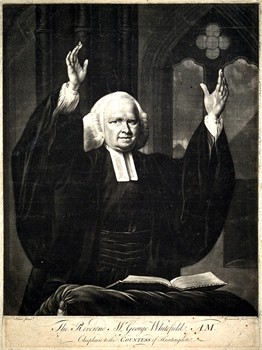
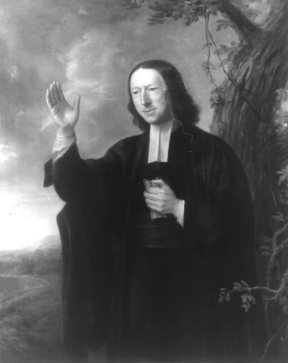
whitefield JohnWesley

(Left: George Whitefield; Right: John Wesley. Two men who differed greatly concerning election, yet for all their differences, accorded the other as being very devout and godly men. Should we disagree, may we be as charitable.)

----------------------------------------------------------

Sunday morning, in a group prayer before worship service, one of the fellows in the group quoted 2nd Peter 3:9 in the usual manner we hear so many people (mis)use it so often. Now, keep in mind, I dearly love this brother and I am not going to call someone a heretic just because they think this verse means that God wants every single person to be saved. But this IS the word of God we are talking about, and we do need to understand what God is saying, and what He is NOT saying. With that in mind, and with humble submission to His word, let us delve into this passage. And to do so, to keep it in context, we actually have to go back to verse 1, and begin there. That said, here is the passage in its entirety. 2nd Peter 3:1-9--
1 Beloved, I now write to you this second epistle (in both of which I stir up your pure minds by way of reminder), 2 that you may be mindful of the words which were spoken before by the holy prophets, and of the commandment of us, the apostles of the Lord and Savior, 3 knowing this first: that scoffers will come in the last days, walking according to their own lusts, 4 and saying, "Where is the promise of His coming? For since the fathers fell asleep, all things continue as they were from the beginning of creation." 5 For this they willfully forget: that by the word of God the heavens were of old, and the earth standing out of water and in the water, 6 by which the world that then existed perished, being flooded with water. 7 But the heavens and the earth which are now preserved by the same word, are reserved for fire until the day of judgment and perdition of ungodly men. 8 But, beloved, do not forget this one thing, that with the Lord one day is as a thousand years, and a thousand years as one day. 9 The Lord is not slack concerning His promise, as some count slackness, but is longsuffering toward us, not willing that any should perish but that all should come to repentance.

When studying any passage of Scripture, certain things need to be considered:
  1. Who was it written to?
  2. Why was it written?
  3. What idea was the author trying to convey?
So, let's take these one at a time.

1) Who was 2nd Peter written to?

To answer this question we can look immediately at 2nd Peter 3:1, and we can also go back to 1st Peter 1:1-2 as well as 2nd Peter 1:1.
1st Peter 1:1-2--Peter, an apostle of Jesus Christ, to the pilgrims of the Dispersion in Pontus, Galatia, Cappadocia, Asia, and Bithynia, elect according to the foreknowledge of God the Father, in sanctification of the Spirit, for obedience and sprinkling of the blood of Jesus Christ.
2nd Peter 1:1--Simon Peter, a bondservant and apostle of Jesus Christ, to those who have obtained like precious faith with us by the righteousness of our God and Savior Jesus Christ.
2nd Peter 3:1--Beloved, I now write to you this second epistle...

So, this letter was written to the same people who received his first letter. These are, of course, believers--saints, holy ones, the saved, the brethren, the elect.

2) Why was it written?

It was written for two reasons:
  • A) To warn believers that there would come into their midst false teachers who would bring destructive heresies. As he writes in 2nd Peter 2:1-3--But there were also false prophets among the people, even as there will be false teachers among you, who will secretly bring in destructive heresies, even denying the Lord who bought them, and bring on themselves swift destruction. And many will follow their destructive ways, because of whom the way of truth will be blasphemed. By covetousness they will exploit you with deceptive words; for a long time their judgment has not been idle, and their destruction does not slumber.
  • B) To encourage believers to continue looking for the return of our Lord Jesus Christ. He had to do so because there were many who were saying that because Christ had not returned yet that He wasn't going to. 2nd Peter 3:3-4--scoffers will come in the last days, walking according to their own lusts, 4 and saying, "Where is the promise of His coming? For since the fathers fell asleep, all things continue as they were from the beginning of creation."

3) What idea was the author trying to convey?

Peter's message in this epistle is simple: Just because Christ has not returned yet does not mean He isn't going to. In 2nd Peter 3:2-3, he encourages the reader to be mindful of the words which were spoken before by the holy prophets...knowing that scoffers will come in the last days. He is exhorting them to remain faithful to the One who is always Faithful, and to wait for His appearance with patience, and to be found without spot and blameless, and consider that the longsuffering of our Lord is salvation (2nd Peter 3:14-15).

So, what does this all mean for 2nd Peter 3:9? Does this mean that the way the Arminian views this verse is not correct? Or does this verse teach that God desires all men to be saved? (After all, isn't that what we read in 1st Tinothy 2:4? Well, more on that verse another time). To answer these two questions: this verse DOES NOT TEACH that God wants ALL PEOPLE to be saved.

So...
  • Who is this written to? The saved, the brethren, the elect.
  • Why was it written? Because there were going to be false teachers slithering their way into the church.
  • What was the idea he was trying to express? To exhort the saved, the brethren, the elect to continue looking for the second coming of Christ.
Which brings us to 2nd Peter 3:9. The Lord is not slack concerning His promise. Here we have what I call a "throwaway phrase." It's one of those phrases that many people just kinda skim over, they repeat it because it's there--but otherwise, they usually chop it out. Can we do that with ANY Scripture? God forbid! If the Holy Spirit spoke it, um, do you think there might be a REASON? Absolutely!

The Lord is not slack. Why does he say that? To stir the people up to patience, to remind them that if God promises something, He will do it (cf. Philippians 1:6), to keep them grounded in their faith to God.

The Lord is not slack concerning His promise. STOP! LOOK AT THE WORD 'PROMISE.' Is this singular, or plural? Singular! I will be forever indebted to A. W. Pink for pointing this out (in The Soverignty of God). The word 'promise' is singular, as in 'promise,' not 'promises.' So, what is the promise he is speaking of? The promise of Christ's return. God is not tardy concerning the return of our Lord.

The Lord is not slack concerning His promise as some count slackness. These false teachers were going to come along and say, "See, Jesus hasn't returned yet! Didn't He say He was coming again 'Soon'?" But that is man's reckoning. God does things in His own timing. Which is why Peter wrote in the preceding verse that with the Lord one day is as a thousand years, and a thousand years as one day. (We won't go into how Theistic Evolutionist types jerk this verse out as some kind of 'proof-text'). If God tarries 10,000 years--is that not 'soon' for Him? He is eternal, what's a few years?

The Lord is not slack concerning His promise, as some count slackness, but is longsuffering toward us. STOP!! STOP RIGHT THERE!!! Here we come to the crux of the matter. WHO is God longsuffering toward?? US!! Who is US? Is it the lost? Is it the entire world? NO!! He is longsuffering toward THE ELECT, THE SAVED, THE BRETHREN. (Note: some translations say He is longsuffering toward "you" instead of "us", a simple matter of whether the Greek is "umas" (you, pl.) or "hmas" (us). However, this does not change the meaning, as "you" would STILL be referring to the saved/brethren/elect.)

Which brings us to where Peter says that God is not willing that any should perish but that all should come to repentance. Two questions to ponder:
  1. Who is the "any" He is not willing should perish? Say it with me! The saved, the brethren, the elect. He is not willing that any He has chosen should perish before the coming of our great God and Savior Jesus Christ. If He has chosen one to be saved, then that person shall not perish until they have come to salvation.
  2. Who is the "all" that will come to repentance? You know. God is not willing that any of the saved/brethren/elect should die without repenting of their sins and trusting in Christ as their Savior. This is what Methodists refer to as "prevenient grace." They believe it to be the grace of God in prolonging the life of a person until they have had the chance to repent. They are close--oh, so close--but as much as I admire John Wesley, I believe this is where we must disagree, for the grace of God in prolonging the life of one (such as I) is not so they have the chance to be saved--but because He chose them before ever the world began, He will prolong the life of His elect until they are saved!
I do hope this has helped to shed some much-needed light on a passage that is so misunderstood by many well-intentioned people (and by some not-so-well-intentioned). We must never discount ANY words of Scripture, for they are given for our edification and that we may grow in grace and knowledge.

The grace of our Lord Jesus Christ be with your spirit!

18 May 2009

Verse-by-verse through Joel (2:11-2:19)

Joel 2:11-2:19--
11 The LORD gives voice before His army, for His camp is very great; for strong is the One who executes His word. For the day of the LORD is great and very terrible; who can endure it? 12 "Now, therefore," says the LORD, "Turn to Me with all your heart, with fasting, with weeping, and with mourning." 13 So rend your heart, and not your garments; return to the LORD your God, for He is gracious and merciful, slow to anger, and of great kindness; and He relents from doing harm. 14 Who knows if He will turn and relent, and leave a blessing behind Him—a grain offering and a drink offering for the LORD your God? 15 Blow the trumpet in Zion, consecrate a fast, call a sacred assembly; 16 gather the people, sanctify the congregation, assemble the elders, gather the children and nursing babes; let the bridegroom go out from his chamber, and the bride from her dressing room. 17 Let the priests, who minister to the LORD, weep between the porch and the altar; let them say, "Spare Your people, O LORD, and do not give Your heritage to reproach, that the nations should rule over them. Why should they say among the peoples, 'Where is their God?'" 18 Then the LORD will be zealous for His land, and pity His people. 19 The LORD will answer and say to His people, "Behold, I will send you grain and new wine and oil, and you will be satisfied by them; I will no longer make you a reproach among the nations.

The locusts have come, they have gone through and laid waste to the crops. The land is desolate. Truly, the Day of the Lord has come, and who has endured? There is no more grain, the olive trees are bare--what shall they use to offer the grain offering? The vineyards are ravished, there will be no wine. How, then, shall the people worship YHVH if they have no grain offering or wave offering or any of the other offerings to bring to the priests? Well, consider this question: what purpose do the grain offerings and the trespass offerings and the wave offerings and all the other offerings--what purpose do they serve? Are they not offered because of sin? Indeed, the question then becomes, "How can a people worship God if they come before Him if their sins have not been covered?"

Which is the point God is making here. He's saying "I don't want your grain. I don't want your new wine. I don't want your oil or your bullocks or your oxen or your fatted calves or your sheep or any of those other things you bring to My temple. You bring them because you are a sinful, rebellious people, and you would rather kill an ox then turn away from your sin. And thus, you cannot see My face because you do not seek My face. And why do you not seek My face? Because you cannot stand to be told of your sinful condition." This is the same word He would speak to these same people through the prophet Isaiah nearly 100 years later! Hear the word of the LORD, you rulers of Sodom--rulers of Sodom! That great and abominable city that was destroyed with its surroundings because they were some of the most evil and wicked men who ever lived, and God tells the priests and the rulers of Judah they are not better than they! In fact, they are worse than the men of Sodom, for if the men of Sodom had seen the mighty works of God, they would have repented! Hear the word of the LORD, you rulers of Sodom; give ear to the law of our God, you people of Gomorrah: "To what purpose is the multitude of your sacrifices to Me?" says the LORD. "I have had enough of burnt offerings of rams and the fat of fed cattle. I do not delight in the blood of bulls, or of lambs or goats. When you come to appear before Me, who has required this from your hand, to trample My courts? Bring no more futile sacrifices; incense is an abomination to Me. The New Moons, the Sabbaths, and the calling of assemblies—I cannot endure iniquity and the sacred meeting. Your New Moons and your appointed feasts My soul hates; they are a trouble to Me, I am weary of bearing them. When you spread out your hands, I will hide My eyes from you; even though you make many prayers, I will not hear. Your hands are full of blood. (Isaiah 1:10-15).

So what is the remedy for the people of Judah? In verses 12-14, we see there needs to be an Honest Repentance. 12 "Now, therefore," says the LORD, "Turn to Me with all your heart, with fasting, with weeping, and with mourning." 13 So rend your heart, and not your garments; return to the LORD your God, for He is gracious and merciful, slow to anger, and of great kindness; and He relents from doing harm. 14 Who knows if He will turn and relent, and leave a blessing behind Him—a grain offering and a drink offering for the LORD your God?

Verses 12-13--"Now, therefore," says the LORD, "Turn to Me with all your heart, with fasting, with weeping, and with mourning." So rend your heart, and not your garments; return to the LORD your God... When? NOW. Do not put it off another day. THEREFORE. And when you see that word 'therefore' you need to ask what is it......there for? We see a link to the previous text. The Day of YHVH is great and very terrible, who can endure it? "Now, therefore, turn to YHVH with all your heart..." In other words, now that the people have seen what God is capable of doing when His wrath is stirred to action, it would be in their best interest to put the worship of Almighty YHVH first, before their sinful desires. He's sick to death of their feasts and new moons and if He smells one more roasted ox He's gonna vomit. And how is it we are to turn to God? "with fasting, with weeping, and with mourning." With fear, yes, but let your repentance be an honest one--not just to avoid His wrath, but because He deserves all the praise, worship, and honor that we are capable of giving.

"With fasting..." We give up the one thing we need as much as water to survive. So that our focus is no longer on ourselves, but on the Lord. "...with weeping..." The word בּכי (bekei), meaning "long lamentation." We don't just say to ourselves, "Well, gee, shucks. I guess I messed up again. Sorry God, my bad!" We cry from the deepest depths of our heart, "Oh God be merciful to me, a sinner!!" And we look back at what we have done to arouse His holy anger and we put our face to the ground and we grovel and beg mercy and with מספּד (mispad)--wailing and weeping, we mourn over those things we have done to grieve the heart of God, for "Blessed is he who mourns, for he shall be comforted."

Verse 13. So rend your heart, and not your garments; return to the LORD your God... Don't just make an outward show of grief. Anybody can do that. Don't just walk around looking at your toes all the time. The Pharisees made this an art form in their days. "And when you pray, you shall not be like the hypocrites. For they love to pray standing in the synagogues and on the corners of the streets, that they may be seen by men. Assuredly, I say to you, they have their reward...Moreover, when you fast, do not be like the hypocrites, with a sad countenance. For they disfigure their faces that they may appear to men to be fasting. Assuredly, I say to you, they have their reward" (Matthew 6:5, 18). The rending of garments was a symbolic act, whereby the person sought to express his grief over something. It had become a common practice among people who were seeking to be seen by others as being so much more spiritual than other people, and it became almost a competition to see who could out-rend the other. The word of YHVH through this prophet says, "Don't do that. Don't just tear your clothes. Tear open your heart." And by tearing open one's heart, one is able to see--with help from the Holy Spirit--what is really in that heart. For we may think our heart is just, and our motives pure. But we must allow God to show us where it is we fall short, lest we leave some blessing behind in our blindness.

...return to the LORD your God, for He is gracious and merciful, slow to anger, and of great kindness; and He relents from doing harm. Who knows if He will turn and relent, and leave a blessing behind Him—a grain offering and a drink offering for the LORD your God? Here the prophet reminds the people of the words of God spoken to Moses (Exodus 34:6-7). How long had God put up with Judah's wickedness! Even if only a few years, is that not enough to warrant God revealing His wrath from Heaven? Considering that it was for but one transgression that all of humanity was found deserving of God's ETERNAL wrath? Wickedness under King Joash (who was ruling over the southern kingdom of Judah when Joel wrote) had grown quickly and violently after the death of the High Priest Jehoiada. It seems as though Jehoiada was a kind of check-valve against Joash's fleshly desires. And when that check-valve was gone, Joash fell into apostasy.

And what do we see in America today? The church is becoming ever more seeker-friendly, going out of their way to be non-offensive, all-inclusive, not wanting to hurt anybody's feelings, and bending over backwards to acommodate the many desires of men to bring their own type of worship into the church, watering down the gospel so that Jesus winds up being nothing more than a Divine Psychologist. And the check-valve against society as a whole going down the tubes is being slowly cut off, and one day, when the bride is taken up to meet her Groom, man will worship man even more than they do now. And after man has inflicted pain and suffering upon man--all the while blaspheming God and screaming for Him to intervene--He will intervene, but not in the way they will want Him to. After man has swum to the bottom of human depravity, God will pour even more misery and destruction upon them. Just like He did by sending these swarms of locusts to devour every living thing they could.

But imagine now, if you will, how patient God was with these people. Again, one sin cast man into enmity against God--and yet He has put up with our shenanigans for thousands of years without destroying us. He even went so far as to send His Son, that by believing we may not perish but have ever-lasting life. And how patient He is toward those who will be saved. 2nd Peter 3:9. If only I had a nickel for every time someone wrenched this verse and turned it into something it isn't. The Lord is not slack concerning His promise, but is longsuffering toward--whom?--US (the saved, the brethren, the elect [see 1st Peter 1:1-2; 2nd Peter 1:1]), not wanting any to perish--any of whom? Any of the saved, any of the brethren, any of the elect--but that all--all whom? All of the saved, all of the brethren, all of the elect--should come to repentance. Oh, if my flesh had its way I would cry out to God to ask why He had the apostle record those words like He did! But, alas, I am but a man, and who am I to counsel God?

Consider how many years He had to put up with your rebellious attitude and abject hatred toward Him. You may answer, "Oh, but I got saved when I was a child, at the age of 8 years!" Oh, OK. That means God only had to wait 8 years until you finally admitted He is Lord. How patient is His love toward His chosen ones!

Then we see there has to be a Humble Reckoning. Verses 15-17. Blow the trumpet in Zion, consecrate a fast, call a sacred assembly; gather the people, sanctify the congregation, assemble the elders, gather the children and nursing babes; let the bridegroom go out from his chamber, and the bride from her dressing room. Let the priests, who minister to the LORD, weep between the porch and the altar... In verses 15 and 16, he repeats the commands given in chapter 1, verse 14. This is an all-inclusive call, and no one is left out. Keil & Delitzsch:
But in order that none may think themselves exempt, the people are more precisely defined as old men, children, and sucklings. Even the bride and bridegroom are to give up the delight of their hearts, and take part in the penitential and mournful worship. No age, no rank, is to stay away, because no one, not even the suckling, is free from sin; but all, without exception, are exposed to the judgment. “A stronger proof of the deep and universal guilt of the whole nation could not be found, than that on the great day of penitence and prayer, even new-born infants were to be carried in their arms” (Umbreit). The penitential supplication of the whole nation is to be brought before the Lord by the priests as the mediators of the nation.

Then in verse 17, he calls for the priests to who minister to the LORD, weep between the porch and the altar. Don't just stand there. Don't just cry and whine and moan. Weep! Let them say, "Spare Your people, O LORD, and do not give Your heritage to reproach, that the nations should rule over them. Why should they say among the peoples, 'Where is their God?'" This is to be our cry. Not just for God to heal our moral woes. Not only to give us rulers we approve of. But what did Jesus teach us to pray? "Thy will be done." When we stop and consider that when we pray, we're not just giving God a laundry list of our human wants and desires. God knows what we need before we have need of them (Matthew 6:8). So, for what do we pray? "Thy will be done." And when we pray for God's will to be done, we should always be prepared for His will to perhaps be at odds with our own desires. And if that be the case, which side should yield?

A prayer for a nation is more than just to protect us from enemies without and within. It is more than to just lavish extravagant material wealth upon us (Oh, how we should pray the exact opposite, that God should give us only those things we need!). It is more than just praying for health and freedom from disease. Praying for a nation means praying for that nation to glorify God this side of Hell. Listen to young Daniel, as he besought the favor of YHVH for the nation Israel:
"O Lord, to us belongs shame of face, to our kings, our princes, and our fathers, because we have sinned against You. To the Lord our God belong mercy and forgiveness, though we have rebelled against Him. We have not obeyed the voice of the LORD our God, to walk in His laws, which He set before us by His servants the prophets. Yes, all Israel has transgressed Your law, and has departed so as not to obey Your voice; therefore the curse and the oath written in the Law of Moses the servant of God have been poured out on us, because we have sinned against Him. And He has confirmed His words, which He spoke against us and against our judges who judged us, by bringing upon us a great disaster; for under the whole heaven such has never been done as what has been done to Jerusalem. As it is written in the Law of Moses, all this disaster has come upon us; yet we have not made our prayer before the LORD our God, that we might turn from our iniquities and understand Your truth. Therefore the LORD has kept the disaster in mind, and brought it upon us; for the LORD our God is righteous in all the works which He does, though we have not obeyed His voice. And now, O Lord our God, who brought Your people out of the land of Egypt with a mighty hand, and made Yourself a name, as it is this day—we have sinned, we have done wickedly!" (Daniel 9:8-15).

When Moses prayed YHVH to repent from wiping out Israel wholesale, did he do so in order for the people's well-being? Did God not know His own plans for Israel? How many times this prayer is misunderstood, for it is not an entreating of God to alter His unalterable will! It was truly a test of Moses' heart.
"LORD, why does Your wrath burn hot against Your people whom You have brought out of the land of Egypt with great power and with a mighty hand? Why should the Egyptians speak, and say, 'He brought them out to harm them, to kill them in the mountains, and to consume them from the face of the earth?' Turn from Your fierce wrath, and relent from this harm to Your people. Remember Abraham, Isaac, and Israel, Your servants, to whom You swore by Your own self, and said to them, 'I will multiply your descendants as the stars of heaven; and all this land that I have spoken of I give to your descendants, and they shall inherit it forever.'" So the LORD relented from the harm which He said He would do (Exodus 32:11-14).

Today, when we pray for our country, let us not pray simply for protection and health and prosperity. Let us pray that this nation would glorify God here on earth! For if we do, He may very well do for us as He did for the people who dwelt within the hearing of the word of YHVH to Joel.

Which is why we see a Holy Restoration in Verses 18-19. Then the LORD will be zealous for His land, and pity His people. The LORD will answer and say to His people, "Behold, I will send you grain and new wine and oil, and you will be satisfied by them; I will no longer make you a reproach among the nations.

Lest any say that God can be swayed by emotions as His creatures are, be reminded of the words of the apostle Paul: God is not mocked (Galatians 6:7). If a nation is zealous for God,with a godly zeal, then God will reward that nation with favor. Is that not why He allowed this country to flourish so rapidly? A nation that was so far behind other nations in terms of industry, trade, agriculture--and yet it shot up like a stalk, being watered by the water of the Word.

And now look. It is in shambles, it has been trodden down by pagans and liberals, Emergents who call themselves "Christian"--all the while denying the Master whom they claim to have been purchased by. If they do, in fact, claim to be bought. How many still say things like, "My body--my choice!" Yet if you belong to Christ, it is not YOUR body! If you belong to Christ, yet you still claim complete ownership of your body, then please be so humble as to reconcile these words spoken by the Holy Spirit to the holy men of old:
1st Corinthians 6:19-20--Or do you not know that your body is the temple of the Holy Spirit...and you are not your own? For you were bought at a price...
Romans 14:7-8--For none of us lives to himself, and no one dies to himself. For if we live, we live to the Lord; and if we die, we die to the Lord. Therefore, whether we live or die, we are the Lord’s.

Or have you indeed been bought? Has the blood of Christ washed away YOUR sins? "Why of course it has! I said a prayer when I was eight years old, and that took care of everything! Now I can live however I want to, because I'm saved!" Not so fast, friend! If you are saved, then can you go through the book of 1st John and answer the questions posed by the apostle whom Jesus loved and find yourself answering those in a way that shows you know the Lord? Or are you depending on the pastor who declared you saved to keep you in God's grace?

You see, we don't worship God because we do certain outward things. Jesus rebuked the Pharisees for washing the outside of the cup, while the inside was filled with the ale of wormwood. Now, before you try and claim I am the Pharisee here, ask yourself one thing: are you depending on outward things for your salvation? Are you counting on your claim to spirituality as your ticket into the Kingdom? Are you seeking to worship God with your lips while your heart is far from Him? If so, then I must say, friend, that it is not I who is closer to being a Pharisee. Because if one is truly saved, then they will read the Word of God and compare it to their life, and find themselves sorely lacking.

They will see themselves as a sinner--and by sinner, I mean one who hates God and stands opposed to the restraints His word puts on our lives. And before you counter with, "How dare you say I hate God! I have never hated God!" I would say "Yes, I thought that too before I knew Christ. But when I saw my life in the light of Christ's perfection, and saw the Law of God as not being something to keep in order to be saved, but rather the yardstick my life did not measure up to--then and only then did I realize that yes, although I knew God was real, although I knew Christ was real and that He died and rose again and was to return, the life I lived was the outworking of a heart that was utterly and desperately opposed to God." It was for this reason the apostle wrote thus to the Roman saints For if when we were enemies we were reconciled to God through the death of His Son, much more, having been reconciled, we shall be saved by His life (Romans 5:10).

But, to conclude, YHVH has told the people of Judah, that if they were to rend their hearts and weep and lament and cry out for God to be glorified among them, He would give them back the things they needed to give their offerings to Him. Likewise, when we humble ourselves before the Master Jesus Christ, we too will receive the gift of the Holy Spirit, whose role it is to "convict the world of sin, and of righteousness, and of judgment" and "guide you into all truth" and "tell you things to come" and to "glorify Me, for He will take of what is Mine and declare it to you" (John 16:8-14).

Let us rend our hearts today! Let us examine ourselves, to see if we are indeed in the faith (2nd Corinthians 13:5). Let us not neglect so great a salvation as we have in Christ (Hebrews 2:3), in whom we have been chosen before ever the world was (Ephesians 1:4), and has saved us from the curse of the Law, becoming a curse for us (Galatians 3:13)! However, let us never think our liberty gives us the right to live in whatever way we wish (Galatians 5:13), but let us be holy and sanctified unto the Lord our God (1st Thessalonians 4:3), that He may supply us with all we need to worship Him in spirit and in truth (John 4:24)!

14 May 2009

50 Answers to 50 Mormon Answers to 50 Anti-Mormon Questions


Notice the little picture above. It is an Oriborus. I really think it symbolizes Mormon theology, because if you share the truth with a Mormon long enough, their theology will start to eat itself.

Tower To Truth Question:

24. If the Adam-God doctrine isn't true, how come D. & C. 27:11 calls Adam the Ancient of Days which is clearly a title for God in Daniel Chapter 7?

-------------------------------

FAIR Answer:

The real question should be how do LDS justify their interpretation of Ancient of Days as Adam. LDS are not dependent upon biblical interpretation for a complete understanding of the meaning of this or any other term. Since LDS have a more expanded idea of Adam's role, it is not surprising that they interpret some verses differently.

The Encyclopedia of Mormonism notes:
For Latter-day Saints, Adam stands as one of the noblest and greatest of all men. Information found in the scriptures and in declarations of latter-day apostles and prophets reveals details about Adam and his important roles in the pre-earth life, in Eden, in mortality, and in his postmortal life. They identify Adam by such names and titles as Michael (D&C 27:11; D&C 29:26), archangel (D&C 88:112), and Ancient of Days (D&C 138:38).

Joseph Smith is one source for this view of Adam:
"‘Ancient of Days’ appears to be his title because he is ‘the first and oldest of all.'"

The critics are also perhaps too confident in their ability to definitively interpret an isolated verse of scripture. This section of Daniel is written in Aramaic, while the rest of the Old Testament is in Hebrew. The phrase translated "Ancient of Days" (attiq yômîn) as one non-LDS source notes, "in reference to God...is unprecedented in the Hebrew texts." Thus, reading this phrase as referring to God (and, in the critics' reading, only God) relies on parallels from Canaanite myth and Baal imagery in, for example, the Ugaritic texts. Latter-day Saints are pleased to have a more expanded view through the addition of revelatory insights.

Like many other Christians, the LDS see many parallels between Christ (who is God) and Adam. Christ is even called, on occasion, the "second Adam." It is thus not surprising that D&C 27:11 associates Adam with a divine title or status when resurrected and exalted—after all, LDS theology anticipates human deification, so God and Adam are not seen as totally "other" or "different" from each other. LDS would have no problem, then, in seeing Adam granted a type of divine title or epithet—they do not see this as necessarily an either/or situation.

This does not mean, however, that Adam and God are the same being, merely that they can ultimately share the same divine nature. Such a reading would be strange to creedal Christians who see God as completely different from His creation. Once again, the theological preconceptions with which we approach the Biblical text affects how we read it.

To learn more:Adam wiki articles
To learn more:Ancient of Days

------------------------------

My Response:

Now, wait a minute. I thought the Mormon church never taught Adam-God! OK, let's work through this one point at a time.
The critics are also perhaps too confident in their ability to definitively interpret an isolated verse of scripture. This section of Daniel is written in Aramaic, while the rest of the Old Testament is in Hebrew. The phrase translated "Ancient of Days" (attiq yômîn) as one non-LDS source notes, "in reference to God...is unprecedented in the Hebrew texts." Thus, reading this phrase as referring to God (and, in the critics' reading, only God) relies on parallels from Canaanite myth and Baal imagery in, for example, the Ugaritic texts.

Um...yeah. No kidding! Just like interpreting Nebuchadnezzar's dream in Daniel 2 relies on interpreting history. The reference to Eerdman's Dictionary of the Bible (the "one non-LDS souce." Why don't they ever tell you what the non-LDS sources are?) is another of those "skimming the surface" type answers FAIR likes to give. Here is the full entry:
Such a term in reference to God, presumably the referent here, is unprecedented in the Hebrew texts, although associations with Everlasting Father in Isaiah 9:6 have been suggested. The most likely source of the imagery is Canaanite myth since El, the head of the heavenly pantheon, is referred to as the "Father of Years" and often portrayed on a throne with heavenly attendants. The association of El with age generally is also notabble in Canaanite mythology. The context of the phrase, occuring in proximity to "One like a son of man," which draws clearly on Baal imagery, further supports this association.

Unfortunately, FAIR gets caught up in the details, and gets distracted in trying to deal with Aramaic, so much so that they miss the clear words of the Scriptures.
Daniel 7:9-10--"I watched till thrones were put in place, and the Ancient of Days was seated; His garment was white as snow, and the hair of His head was like pure wool. His throne was a fiery flame, its wheels a burning fire; a fiery stream issued and came forth from before Him. A thousand thousands ministered to Him; ten thousand times ten thousand stood before Him. The court was seated, and the books were opened."

Let's see. One sat on a throne. Ten thousand times ten thousand stood before Him, books were opened. These are some of the images we read about in Revelation referring to the Father and Christ. Then skip down to Daniel 7:13-14--
"I was watching in the night visions, and behold, One like the Son of Man, coming with the clouds of heaven! He came to the Ancient of Days, and they brought Him near before Him. Then to Him was given dominion and glory and a kingdom, that all peoples, nations, and languages should serve Him. His dominion is an everlasting dominion, which shall not pass away, and His kingdom the one which shall not be destroyed."

The Son of Man coming on the clouds of Heaven. To Him was given dominion and glory and a kingdom. His is an everlasting kingdom. If FAIR can show how any of these things do not refer to the Father and the Son, please show me. Next!
Like many other Christians, the LDS see many parallels between Christ (who is God) and Adam. Christ is even called, on occasion, the "second Adam." It is thus not surprising that D&C 27:11 associates Adam with a divine title or status when resurrected and exalted—after all, LDS theology anticipates human deification, so God and Adam are not seen as totally "other" or "different" from each other. LDS would have no problem, then, in seeing Adam granted a type of divine title or epithet—they do not see this as necessarily an either/or situation.

LDS theology anticipates human deification? Really? Try getting a Mormon to tell you that! Well, it is surprising that the D&C gives a divine title to Adam, since none is ever given to him in the Bible. And basically, FAIR is saying here that Adam is like God. Look at what they said: "God and Adam are not seen as "different" from each other." Now, I may not always be the brightest bulb in the chandelier, but I do know a thing or two about the English language (although I have never studied Reformed Egyptian). If two things are not "different" from one another, does that not, by default, mean that they are "the same"? So, are they not saying that Adam is LIKE GOD?

So, in a nutshel, since I'm sure by now you feel like something that rhymes with "Tetzel," is FAIR's answer to this question...........................yeah, I'm trying to figure it out, too. Once again, they don't answer the question. They do a little song-and-dance, change the subject, and leave the reader confused enough to believe they know something more than they really do.

Systematic Theology--Lesson 7, Salvation (part 2)

We pick up where we left off from last time, talking about The Preparation For Our Salvation. We saw that The Whole Trinity Was Involved. We have seen already that it was The Father's Choice, it was The Son's Cross. Next we see it is The Spirit’s Conviction. That there is nothing in us that desires to follow God, but we are drawn by the Holy Spirit.

It is the work of the Holy Spirit to draw us to God because we don’t want to be drawn. When we are going on about our happy little lives, happily sinning our lives away, tra-la-la-ing our way toward the gates of Hell—the Holy Spirit enters in, breathes life into our dead spirit, and makes us alive to God. John 16:7-8“Nevertheless I tell you the truth. It is to your advantage that I go away; for if I do not go away, the Helper will not come to you; but if I depart, I will send Him to you. And when He has come, He will convict the world of sin, and of righteousness, and of judgment.” 2nd Corinthians 4:4But even if our gospel is veiled, it is veiled to those who are perishing, whose minds the god of this age has blinded, who do not believe, lest the light of the gospel of the glory of Christ, who is the image of God, should shine on them. We cannot know how to please God unless He shows us. 1st Corinthians 2:11-14Even so no one knows the things of God except the Spirit of God. Now we have received…the Spirit who is from God, that we might know the things that have been freely given to us by God…But the natural man does not receive the things of the Spirit of God, for they are foolishness to him; nor can he know them, because they are spiritually discerned. Why do we think they are foolishness? What condition is our spirit in when we are born? Ephesians 2:1You, therefore, being dead in trespasses and sins… Colossians 2:13And you, being dead in your trespasses and the uncircumcision of your flesh, He has made alive together with Him, having forgiven you all trespasses. So that's the Preparation For OUr Salvation.

Next, The Provision For Our Salvation. Matthew 1:21. Mary is with child by the Holy Spirit. Joseph wants to put her away privily (divorce her privately), but the angel tells him, “Joseph, son of David, do not be afraid to take to you Mary your wife, for that which is conceived in her is of the Holy Spirit. And she will bring forth a Son, and you shall call His name JESUS, for He will save His people from their sins.” And again, when did God decide to send His Son? Before the foundation of the world, God provided an offering for our sins. He provided a Lamb. Why? For God so loved… Here’s a question for ya. Where is the first place we find the word “love” in the Bible? Yeah, Genesis, no kidding! Specifically, Genesis 22.

Genesis 22:1-2Now it came to pass after these things that God said, "Abraham!" And he said, "Here I am." Then He said, "Take now your son, your only son Isaac, whom you love, and go to the land of Moriah, and offer him there as a burnt offering …" In verse 2, where does God tell Abraham to take his son? Moriah. Many Christian scholars, archaeologists, believe that this Moriah went by a different name by the time of Christ. Guess what that name was. Golgatha. Christ was most likely crucified in the same place where Isaac was offered as a sacrifice. But that Old Testament stuff is so boring! Look at verses 7-8Then Isaac said, “Look, the fire and the wood, but where is the lamb for a burnt offering?” And Abraham said, “My son, God will provide for Himself the lamb for a burnt offering.” Who will provide the Lamb? John 1:29“Behold the Lamb of God!”Behold the Lamb that God provided to take away the sins of His people! The Lamb that God provided as a burnt sacrifice! The Lamb that will be laid on the wood, and take the fire of God’s wrath!” God provided a Lamb for our sins. A spotless, sinless Lamb without spot or blemish.

Let’s talk about His Sinlessness. We went over this in a previous lesson, but we really need to stress it because there are a lot of “churches” that are teaching that Christ sinned, or that He at least wanted to sin. That is blasphemy. And yes, I will cross that line and use that word. I'll tell that to anybody. To say that Christ was capable of sinning is utter blasphemy! Who was Jesus? He was God! Can God sin? James 1:13-15Let no one say when he is tempted, "I am tempted by God"; for God cannot be tempted by evil, nor does He Himself tempt anyone. But each one is tempted when he is drawn away by his own desires and enticed. Then, when desire has conceived, it gives birth to sin; and sin, when it is full-grown, brings forth death. So, according to James, what are we tempted by? Our own desires. Where do those desires come from? Our flesh. Our sinful nature that we inherited from Adam.

Adam passed it down to all his children, his sons passed it to all their children, and then who passed it to us? Our human fathers. Did Christ have a human father? Did He inherit a desire to sin? We sin because of our desires, which spring from our sinful nature, which we inherit from our human fathers. Christ did not have a human father, did not inherit a sinful nature, had no desires that were opposed to God—do you think He could have sinned? This also throws out the window the Romish claim that Mary had to be perfectly sinless so that Christ could be born sinless. Jesus did not have a human father--that alone guaranteed He would be sinless.

When we sin, can we say we have been tempted by God? No. Why? Because He cannot be tempted by evil. Is Christ God? Can God be tempted with evil? "Well, wait a minute! Hebrews 4:15 says we have a High Priest who was in all points tempted as we are!" We need to make a distinction—Jesus was tempted with sin—but He was not tempted by sin. Temptation has two sides—the one doing the tempting, and the one being tempted. I can walk in with a bottle of liquor and say, “Hey, come on, let's roll!” But you can look at me and tell me to take a hike. In other words, I tempt you with something, but you are not tempted by it. 1st John 3:5 (NASB)You know that He appeared in order to take away sins; and in Him there is no sin. 1st Peter 2:22 (NASB)He committed no sin, nor was any deceit found in His mouth. 2nd Corinthians 5:21 (NASB)For He made Him who knew no sin to be sin on our behalf, so that we might become the righteousness of God in Him. So that’s The Preparation, The Provision, and now The Procurement of Our Salvation. In other words, as the jailer cried out in Acts 16:30“Sirs, what must I do to be saved?”

First we need to have A Genuine Humility. Matthew 5:3-4, 6-8 (NASB)“Blessed are the poor in spirit, for theirs is the kingdom of heaven. Blessed are those who mourn, for they shall be comforted…Blessed are those who hunger and thirst for righteousness, for they shall be satisfied. Blessed are the merciful, for they shall receive mercy. Blessed are the pure in heart, for they shall see God.” Acts 2:37They were pierced to the heart, and said to Peter and the rest of the apostles, "Brethren, what shall we do?"Well, first you need to know that that God loves you very much and has a wondereful plan for your life!” How many times in Acts do we find the word “love?” ZERO!! Not once, in the entire book of Acts, do we EVER read anything about the apostles telling people "God loves you." If Rick Warren and Bill Hybels had written the book of Acts, Stephen would have been the most beloved man in all of Jerusalem because he never would have exposed the people's sins.

When the rich young ruler came up to Christ, asking Him how he could inherit eternal life, did Jesus beat around the bush? Did He say, "Well, you're doing pretty good. I mean, you're a good person, and God is really cheering you on. And He loves you very much." Did He try and sugar-coat His message in an attempt to be “relevant” to this young man? No. The first thing He did was to take him to the law. Matthew 19:16-22Now behold, one came and said to Him, "Good Teacher, what good thing shall I do that I may have eternal life?" So He said to him, "Why do you call Me good? No one is good but One, that is, God. But if you want to enter into life, keep the commandments." He said to Him, "Which ones?" Jesus said, “'You shall not murder,' 'You shall not commit adultery,' 'You shall not steal,' 'You shall not bear false witness,' 'Honor your father and your mother,' and, 'You shall love your neighbor as yourself.'” The young man said to Him, "All these things I have kept from my youth. What do I still lack?" Jesus said to him, "If you want to be perfect, go, sell what you have and give to the poor, and you will have treasure in heaven; and come, follow Me." But when the young man heard that saying, he went away sorrowful, for he had great possessions. Christ simply showed this man the cost of eternal life. He did not want to pay it. Today he would have said, “I’m a successful attorney with high-powered clients! I’ve got a three-car garage, a house in an expennsive subdivision; I belong to to the country club, got a condo in Boca Raton. I’m supposed to give all that up for some pie-in-the-sky-by-and-by?” Around here, someone might say, “All I gotta do is sell a few bags on the corner and I make a ton of loot. I ain't gotta work, ain't gotta pay taxes. I got a shiny car with a boomin’ system and a set of 26’ spinnin’ rims. I got more girls than I know what to do with. I'm supposed to give all that up?” Now, did Jesus go chasing this guy? He simply laid it out there for him, said “Take it or leave it”—and he left it.

I have got to share something with you about this story of this young man. Let me give you one example of what a bold-faced liar Creflo Dollar can be. He was doing an interview with CNN. The lady asked him about this particular passage. Listen to what this man said, word-for-word. “If you keep reading down a few more Scriptures, it says, ‘And he received a hundred-fold, everything that he gave.’” That is NOT what it says. If that man does not repent he will have a lot to answer for one day. That is why I continue to point out people like this. So you will know to avoid them and not be deceived by them.

Eternal life requires A Genuine Humility. It requires A Granted Repentance. 2nd Timothy 2:24-26And a servant of the Lord must not quarrel but be gentle to all, able to teach, patient, in humility correcting those who are in opposition, if God perhaps will grant them repentance, so that they may know the truth, and that they may come to their senses and escape the snare of the devil, having been taken captive by him to do his will. It is God that grants us repentance. Do we want to repent? We would like nothing better than to continue our lives sinning and doing every other evil thing we please, thank you very much. Without repentance, there is no salvation. If we are going to teach the love of Jesus, we must teach repentance.

Matthew and Mark both tell of the first thing Jesus taught after He was baptized by John and tempted by Satan. What was that? Some people would have you think that the first thing He taught was for us to love one another and do good things and to help people and to not judge anybody and blah blah blah. NO! The first thing Jesus preached was “REPENT!” Turn away from your sin and return to God! And to us, the Holy Spirit preaches to us all our lives, but we keep throwing up blinders so we don’t see, we stop our ears so we can't hear, and then one day God gets sick and tired of us ignoring Him and the Holy Spirit reaches down and turns on the light in our spirit, and we see what a wretched sinner we are, and that God has been patient with us, not wanting us to perish until we do repent, and He puts a new spirit in us. And He shows us how worthless the things of this world are.

Then we mourn over the years we have spent serving our own desires. 2nd Corinthians 7:9-10Now I rejoice, not that you were made sorry, but that your sorrow led to repentance. For you were made sorry in a godly manner…For godly sorrow produces repentance leading to salvation, not to be regretted; but the sorrow of the world produces death. A Genuine Humility. A Granted Repentance. A Gift of Faith. Not only is our repentance a gift from God, but the faith we need for salvation comes from God as well. Romans 3:28Therefore we conclude that a man is justified by faith apart from the deeds of the law. Romans 4:5But to him who does not work but believes on Him who justifies the ungodly, his faith is accounted for righteousness. Ephesians 2:8-9For by grace you have been saved through faith, and that not of yourselves; it is the gift of God, not of works, lest anyone should boast.

There are three components to saving faith. Knowledge. Romans 10:14How then shall they call on Him in whom they have not believed? And how shall they believe in Him of whom they have not heard? Assent, or Acceptance of the facts as being true. James 2:19You believe God is one; you do well… Which brings us to Commitment. The rest of James 2:19…even the demons believe and tremble. Commitment is a trust in the person of Christ and striving to live a life that is pleasing to God, and show the world that you are His child. And the life we lead is of much more significance than any little prayer we pray. Because if we are going to go around bearing the title “Christian,” then we are telling the world “This is what Christ looks like.”

And for some people, the cause of Christ would be far better off is they would just not claim they are a Christian. Because they are showing the world a picture of a false Christ. I'm reminded of the story my fellow DefCon blogger Desert Pastor told of a young deserter from the army of Alexander the Great. When they brought the young man before the emperor, he asked the soldier his name.

The young man replied, “Alexander, sir.”

The emperor snapped back, “What did you say?”

Again, the reply “Alexander, sir!”

Alexander looked the young man dead in the eye and said, in no uncertain terms, “Then you either change your conduct or you change your name!”

When it comes to those who claim to be following Christ—if they have not changed their conduct, then God has not changed their name. Knowledge and assent are needed. But more than anything, a commitment must be made.

Let me close with an illustration. One of the classes I take for nursing is OB. We learn about the many processes of birth. One of the things that really struck me was when we take our first breath. See, in the womb, the child does not actually breathe. He is supplied with blood and nutrients through the umbilical cord. He doesn’t need to use his lungs, and in fact the only reason his lungs stay expanded and open is because of the amniotic fluid he is swimming in, which is filled with—you don’t even want to know. But here’s the thing—during birth, as the child is making his way through the birth canal, the lungs are squeezed through a tight space, and most of that gunk gets pushed out. And after they get squeezed coming through the canal, when his chest comes out, the first thing that child does is—it’s not to cry. Crying is not the first thing the child does. Before the child can cry, his lungs have to recoil—his lungs have to be filled with breath. Check this out—the Greek word for breath is pneuma. Want to know what else that word pneuma means? “Spirit.” Before we can cry out to God, we have to be filled with His breath—or, literally, His Spirit. Jesus told Nicodemus, “Ye must be…” what? Born again. You must be squeezed through a narrow way, you must push out all the stuff you were filled with before, and you must be filled with the breath—the Spirit—of God, so that you can cry out to God. How cool is that?