Showing posts with label God's grace. Show all posts

04 June 2025

A Survey of the Old Testament Law--Numbers 6, the Nazirite Vow (Part 4)

"The LORD bless you and keep you; the LORD make His face shine upon you, and be gracious to you; the LORD lift up His countenance upon you, and give you peace."

4) The LORD…be gracious to you. Grace. The one thing we need from God, and one thing it is so hard to ask for if we are allowing our flesh to dictate our lives. Because, for one thing, grace is a gift. Romans 4:4—Now to him who works, the wages are not counted as grace but as debt. One thing that separates Christianity from all other religions is grace. In Islam your good deeds must outweigh your bad deeds, and if not—even by the weight of an atom—Allah the All-Merciful™ will send you to Hell. In Buddhism and Hinduism, you must do your dharma—your religious duty—in order to advance. In Roman Catholicism you must do good works to be saved—not that you must do good works to show you are saved as it says in James 2:18. The grace shown by God is this, that while we were yet sinners Christ died for us (Romans 5:8). Other religions cannot grasp that. They think that you have to do good in order to be accepted by God. What was so special about these pitiful little Israelites that God said “you are Mine”? Nothing. What was so special about Abram that God sais “all nations shall be blessed in you”? Nothing. What was so special about Isaac or Jacob—especially Jacob—that God would bring about a great nation from them? Nothing. What was the defining characteristic of Moses that made God say “That’s him! That is the man who is perfectly capable and equipped to lead over a half million people in the wilderness and appear before me!” Absolutely nothing. Zero, zip, zilch, nada. Nothing. What was it about you that made God say “Yes! I want that person! He/she has done spectacularly amazing things and I want them on My team!” Answer: less than nothing.

So why did God choose Abram? Why did He choose Isaac and Jacob? Why did He choose Moses? Why did He choose—you? One word: GRACE. The passage that is stamped on your forehead whenever you join a Baptist church is Ephesians 2:8-9— 8 For by grace you have been saved through faith, and that not of yourselves; it is the gift of God, 9 not of works, lest anyone should boast. The argument is “well, which of them is the gift—the grace, the faith, or the saved?” The answer of course is “Yes”. It is all of them. Grace is obviously a gift, “good-will, loving kindness, favour: of the merciful kindness by which God, exerting his holy influence upon souls, turns them to Christ, keeps, strengthens, increases them in Christian faith, knowledge, affection, and kindles them to the exercise of the Christian virtues” according to Strong. Romans 11:5-6— 5 Even so then, at this present time there is a remnant according to the election of grace. 6 And if by grace, then it is no longer of works; otherwise grace is no longer grace. But if it is of works, it is no longer grace. Guess how much God’s grace depends on us? Again, nothing. Zero, zip, zilch, nada. Nothing.


How do I know this is true? Because I know me. I know the man I used to be. The music I listened to, the movies and TV shows I watched, the beer I drank. But I will say this much—I did not have a problem with pornography. I watched it every chance I got with no problem. I lived the struggles men face—the lust of the flesh, the lust of the eyes, and the pride of life (1st John 2:16)—and I didn’t back down to them, I charged full face right into them and enjoyed every minute of it. If you had told me back then that I would one day have a website where I would tell everyone reading it the truth of God and His Christ, I would not have believed you, even for a second. From the hymn “I Know Whom I Have Believed” by DW Whittle:


I know not why God’s wondrous grace to me is daily shown,

Nor why, with mercy, Christ in love redeemed me for his own.

I know not how this saving faith to me he did impart,

Nor how believing in his word wrought peace within my heart.

I know not how the Spirit moves, convincing us of sin,

Revealing Jesus through the Word, creating faith in him.

I know not when my Lord may come, at night or noon-day fair,

Nor if I’ll walk the vale with him, or meet him in the air.


There is also a refrain in there, taken verbatim from 2nd Timothy 1:12—I know whom I have believed and am persuaded that He is able to keep what I have committed to Him until that Day. That is another component of grace, is God keeping those who are His until that last Day. It was a hurdle I had to get over, that when God saves someone, they are in His hand forever. Some dismissively call it “once saved always saved”. I prefer to call it the Perseverance of the Saints, and is found all over Scripture, most notably Philippians 1:6 and Hebrews 10:14 and, as above, 2nd Timothy 1:12. To say that one can be saved and God would not hold on to that person not only makes the one who thinks that turn God into an unfaithful God, but also contradicts Scripture.


5) The LORD lift up His countenance upon you. What does it mean for God to “lift up His countenance”? Well, we know God does not have and actual face. We see all the Renaissance paintings of God sitting on the clouds, a bearded old man who reaches out a finger to give life to Adam in Michelangelo’s “The Creation of Adam” on the ceiling of the Sistine Chapel. But in all reality, God is Spirit (John 4:24), and does not have an actual face like you or me. In fact the Westminster Confession says “There is but one only living and true God, who is infinite in being and perfection, a most pure spirit, invisible, without body, parts, or passions” (Westminster Confession, 2.1).

Well, it is what we call “anthropomorphic language”: giving human traits to a being that is not human. And we know God is not human—obviously. But He had to express Himself in a way the people could understand. And this is but one way. The first place we see it is after Jacob wrestles with the Angel in Genesis 32:30—So Jacob called the name of the place Peniel, saying, "For I have seen God face to face, and yet my life has been delivered." Now we know that Jacob did not really see God’s face, because God tells Moses in Exodus 33:20—“But,” he said, “You cannot see my face, for man shall not see me and live.” Again, Jacob used anthropomorphic language.

We must understand that the “face of God” is not something that can be seen, but something that must be sought after. It is us knowing Him, and Him knowing us. It is us seeking Him so we may know His will, and Him looking upon us that He may lead us and guide us. The phrase “seek His face” is used 7 times in the Old Testament, 3 times in the Psalms. David was a man after God’s own heart (1st Samuel 13:14), and constantly sought the face of God, that he may know what His will was and how he should go about pleasing Him (1st Chronicles 16:11 [which is repeated in Psalm 105:4], Psalm 27:8). This phrase is also used in 2nd Chronicles 7:14, Hosea 5:15 and Hosea 7:10. When we seek the face of God, we are asking for an audience with Him, to pour out our prayers and supplications.

Now, does God hide His face? Yes. He even hid His face from David. Psalm 30:7—LORD, by Your favor You have made my mountain stand strong; You hid Your face, and I was troubled. Why would God hide His face? Well, even though David was a man after God’s own heart, he stumbled. There was a time when he REALLY stumbled (2nd Samuel 11:4). And when he did stumble, God would not be there for David. And no matter how he may have been treated by men, this made David cry out even stronger. When I was in high school, I tried to sneak off with a friend of mine. When mom found out—and caught me—she didn’t hit me or lay any kind of corporal punishment on me. Know what she did? She said “I’m really disappointed in you”. Ouch! There I was, in my high school football jersey, bawling my eyes out because of her words. It hurt worse than any kind of lashing. But it got her point across. That is what it was like for David when God hid His face.

A couple other times when God hid His face, the first is Isaiah 54:8—"With a little wrath I hid My face from you for a moment; but with everlasting kindness I will have mercy on you,” says the LORD, your Redeemer." Of course, this is right after the prophecy of Christ, in Isaiah 53. He is speaking, I believe anyway, to Israel after they crucify the Lord of Glory, and He turns away from them. But this will not be a turning away forever, and He will bring them back to Himself (Romans 11:1-5). We also see Him hiding Hid face in Ezekiel 39:23—“The Gentiles shall know that the house of Israel went into captivity for their iniquity; because they were unfaithful to Me, therefore I hid My face from them. I gave them into the hand of their enemies, and they all fell by the sword.” This was when God allowed Israel to be taken into exile by Babylon (2nd Chronicles 36:16-21). He allowed them to be taken away because they mocked the messengers of God, despised His words, and scoffed at His prophets, until the wrath of the LORD arose against His people, till there was no remedy (2nd Chronicles 36:16). Then when calamity fell upon them, they had nowhere to turn, there was no one who would fight for them, and God Himself fought against them and they fell into captivity.


But God… My favorite phrase in all of Scripture. Romans 5:8—But God demonstrates His own love toward us, in that while we were still sinners, Christ died for us. God, who is rich in mercy, lifted His face to us Gentiles--Gentiles from whom He had hidden His face for so many years--and welcomed us into His kingdom. He sent His Son, His perfect, beloved Son, in the flesh, to dwell with us, and to give His life for us so that all those who believe on Him could gain eternal life—not by the blood of bulls and goats, but by faith in the Only Begotten Son of God, His death on the cross, and His resurrection from the dead! Praise His name! And when we say God looks upon us—let’s face it, God sees everything. He is always there, omnipresent, all-seeing, all-knowing, all and in all—what we mean is summed up neatly in 1st Peter 3:12—For the eyes of the LORD are on the righteous, And His ears are open to their prayers. He does not hide Himself from those who believe and belong to Christ. He may seem far away, but He isn’t. He is there, always there, to hear our petitions and supplications, and to offer a way of escape from temptations. JC Ryle has this to say about our free forgiveness in Christ—


If any man is willing to be saved, the Lord Jesus Christ stands ready to save him. "Come unto Me," He says, "weary soul, and I will give you rest. Come, guilty and sinful soul, and I will give you free pardon. Come, lost and ruined soul, and I will give you eternal life. Come and be freely saved." Oh, reader, let this message be a word in season! Arise and call upon the Lord. Let the angels of God rejoice over one more saved soul; let the courts of heaven hear the good tidings that one more lost sheep is found. Believe on the Lord Jesus Christ, and thou shalt be saved.

 YHVH lifts His countenance on all who acknowledge Jesus Christ as Lord and Savior. A great blessing these Israelites did not know at the time, but understood when Christ entered through the gates of Heaven, leading captivity captive, leading His saints into everlasting glory. Amen!

6) The LORD…give you peace. When men talk about peace, it is always temporary. And it always hinges on both sides giving what the other side wants. And it never lasts. Why? Because humans are involved. James 4:1-3—1 Where do wars and fights come from among you? Do they not come from your desires for pleasure that war in your members? 2 You lust and do not have. You murder and covet and cannot obtain. You fight and war. Yet you do not have because you do not ask. 3 You ask and do not receive, because you ask amiss, that you may spend it on your pleasures. Why does negotiating for peace take such a long process? Because neither side wants to give anything up, but they want the other side to give up stuff. Look at the Middle East. They have had a merry-go-round of peace talks for how many years? And are they any closer to having a lasting peace in that area?

Consider the Camp David Peace Accords, signed in 1978 by Jimmy Carter, Anwar Sadat and Menachem Begin. The three men agreed on a plan that would suit everyone. And what happened in 1981? Anwar Sadat was assassinated. By whom? By an Islamic extremist who was ticked off that Sadat would sign a peace deal with Israel. In 1993, Bill Clinton negotiated a peace settlement between Yitzhak Rabin and Yassir Arafat, which split the West Bank into Israeli and Palestinian sectors. Donald Trump brought Benjamin Netanyahu together with the leaders of Bahrain and the UAE in 2020. And yet, today, we have Palestinians holding Israelis hostage while Israel bombs Palestine. Not to mention the war in Ukraine (and oh by the way, neither side in the Russia-Ukraine war is a “good guy”. The people of those countries, yes. Their leaders? Not so much). Nations will never be at peace with each other because human beings are involved.

But God… The One who rules over all of Creation, the One who holds all things in His hands, the One of who it has been said, “There is not a square inch in the whole domain of our human existence over which Christ, who is Sovereign over all, does not cry, Mine!” (Abraham Kuyper), has made a way for us humans to be at peace with Him. He gives us peace through the blood of His cross. And we give Him…..what, exactly? What is there that we can give Him that He needs? Our good deeds? Isaiah 64:6—But we are all like an unclean thing, and all our righteousnesses are like filthy rags; we all fade as a leaf, and our iniquities, like the wind, Have taken us away. Titus 3:4-5—4 But when the kindness and the love of God our Savior toward man appeared, 5 not by works of righteousness which we have done, but according to His mercy He saved us… Galatians 2:16— knowing that a man is not justified by the works of the law but by faith in Jesus Christ, even we have believed in Christ Jesus, that we might be justified by faith in Christ and not by the works of the law; for by the works of the law no flesh shall be justified. We are not saved by our “good” works. It has been said that “we contribute nothing to our salvation except the sin that makes it necessary.” This quote has been attributed to both Jonathan Edwards and Philip Melanchthon, and I have found nothing that settles the debate of who said it originally. But whoever said it, it is correct.

God gives us eternal life and what do we give Him? Our sins. Doesn’t seem like a fair trade now, does it? But God is not fair, and we should be eternally grateful for that. Because if God were fair, we would all be burning in Hell for all eternity, and Christ would not have come down to die on the cross to bear away our sins. But God was not fair! He was not fair to His Son, who died that we may have peace with God. John 14:27—“Peace I leave with you, My peace I give to you; not as the world gives do I give to you. Let not your heart be troubled, neither let it be afraid.” Romans 5:1—Therefore, having been justified by faith, we have peace with God through our Lord Jesus Christ. Paul starts his epistles with the words “Grace to you, and peace, from God our Father and the Lord Jesus Christ”. See, the Greeks and Romans believed in a plethora of (little-g) gods. And by plethora, that says a lot 😀. Sorry, couldn’t resist, Well, I could have, but…Anyway. One thing they never had with any of these gods was peace. They were always worried about offending them; they had to continually offer oblations and sacrifices to them. But what do we do if we do something that offends the God of all Creation? Pray. Ask forgiveness. And guess what? He’ll forgive. The hymn “O God of Love, O King of Peace” by Henry Williams Baker:


O God of love, O King of peace,/Make wars throughout the world to cease;

Our greed and violent ways restrain./Give peace, O God, give peace again.

Remember, Lord, your works of old,/The wonders that your people told;

Remember not our sins' deep stain./Give peace, O God, give peace again.

Whom shall we trust but you, O Lord?/Where rest but on your faithful word?

None ever called on you in vain./Give peace, O God, give peace again.

Where saints and angels dwell above/All hearts are joined in holy love;

Oh, bind us in that heav'nly chain./Give peace, O God, give peace again.     

 In our fallen state, we were at enmity with God. He gave us His Son, who gave His life on Golgotha that we may be saved from our sins and from the wrath of God. And what do we give Him in return? We give Him nothing that He needs, for He needs nothing. But we give Him our lives, our love, and our sins, which made it necessary for us to be saved from His wrath and from death and hell.

 "The LORD bless you and keep you; the LORD make His face shine upon you, and be gracious to you;the LORD lift up His countenance upon you, and give you peace."

Jesus Christ is Lord.

Amen.

18 November 2010

Verse-by-verse through Philippians (Conclusion, 4:21-4:23)

Four chapters, 104 verses, 65 lessons. We’ve seen that even though this was a very personal letter that Paul wrote to this one church, what he said can be applied to any church, even to this day. Just to kinda speed-dial through the first 103 verses, in chapter 1 Paul starts out showing his affection for this church that he loved so dearly. He lets them know that the one and only desire of his heart is that Christ be preached. In chapter 2, He exhorts those of us in the church to be united as one body, and to be humble and to consider the needs of others as being greater than our own needs. Then he launches into one of the most well-known doxologies in Scripture. The word “doxology” means “speaking of the glory of God.” And he uses the example of Christ—the eternal God who became a slave—to encourage us to serve one another so that we may show the world the glory and grace of Christ.

Chapter 3 warns us to avoid those who would teach salvation by works. And for this he uses himself as the example, that he was a man who was well-known, well-respected and admired by all of Jewish society. But he looks back and sees that all of his earthly accomplishments were a pile of rubbish, and that the only thing he desired now was to go forward, reaching for the prize that Christ has laid up for all the saints. Chapter 4 shows us a disagreement between two ladies in the Philippian church, and he tells them to, basically, “Knock it off and get along with each other.” We don’t know what the fuss was about because, quite frankly, it doesn’t matter—whatever the dispute, it was bringing reproach upon the church. Then, we find what so many people are searching for today—the secret of true contentment. PSST—It’s in Christ Jesus.

So now, we come to the last few verses in Philippians, and when we get to the last few verses of a book in the Bible like, for example, Romans 16, I commend you to Phoebe…receive her in like manner…Greet Priscilla and Aquila…Andronicus, Julius…Tryphaena and Tryphosa… "OK, that’s done!" But when we actually get down into the text—knowing that these words were given to Paul by the Holy Spirit—when we see the background it shows why these words are important.

Philippians 4:21-23—21 Greet every saint in Christ Jesus. The brethren who are with me greet you. 22 All the saints greet you, but especially those who are of Caesar's household. 23 The grace of our Lord Jesus Christ be with you all. Amen.

When we talk on the phone to our family who may be living a long ways off, how do we usually end the conversation? “Tell everybody we said ‘Hi!’ You remember Johnny Smith? He says ‘Hi!’” Paul ends many of his letters in this manner. 2nd Corinthians 13:12-13—Greet one another with a holy kiss. All the saints greet you. Romans 16 is full of greetings from the saints to the saints. 2nd Timothy 4:19—Greet Prisca and Aquila, and the household of Onesiphorus. Titus 3:15—All who are with me greet you. Greet those who love us in the faith. And here, Philippians 4:21—Greet every saint in Christ Jesus. Paul is urging us here to make every effort to, basically, speak to one another.

What happens to a church when no one speaks to each other? And what happens to someone who happens to drop in to visit that church? Well, in the case of the little church mom took me to when I was a child, the congregation gets split up, you have this little clique over here and that little clique over there—what happens to the people who don’t join any of these little cliques? Then, on the other hand you have those people that are always looking for pennies. What do I mean by that? They're checking the shine on their shoes. They keep their eyes glued to the carpet, thinking, “Don’t look up, don’t make eye contact. Someone might see and want to talk and—oh drats! Pastor saw me! Hey Pastor, how ya doin!” Then you have the people who shake your hand, they talk and laugh with you, and once they turn around they tell their wife/husband “Can you believe that person? I heard that one time they…” That’s not greeting people.

On the other hand, our friend in the front row here, for example. Have you ever seen him not shake someone’s hand? You’d think you were standing on the San Andreas Fault. Greet every saint in Christ Jesus.

Then Philippians 4:21b-22—The brethren who are with me greet you. All the saints greet you, but especially those who are of Caesar's household. Now, you can call me Lucy—because I've got some ‘splainin’ to do. If you recall, when we started this study, we started in Acts 16. We looked at the start of the church in Philippi. The first convert was a woman named Lydia and the ladies who were with her. The next convert was…anybody? The Philippian jailer. Philippi—and I promise, this is the last time you will hear me say this for a long time—Philippi was a colony of—who? Many military officers who retired were encouraged to settle their and flood it with their Romanism.

So this Philippian jailer probably—and I ain't gonna take a bullet for this—he probably had some military background. If that is the case, then he probably heard about The events recorded in Acts 16 took place around 52 AD. The story was still going around about that group of crazy soldiers who couldn’t even guard the tomb of a dead Jewish rabbi in the land of Palestine, and that fell asleep and let the disciples of that dead Jewish rabbi steal the body (Matthew 28:11-15). What dead Jewish rabbi am I talking about? And here is this jailer in Philippi, guarding some of the newer followers of this dead Jewish rabbi, and suddenly, at midnight, what happens? This jailer sees the power of the God that these guys worship.

Now, let’s consider this also—Paul wrote Philippians during his first arrest by the Roman government, about 62 AD. During this confinement, he was chained to either one or two Roman soldiers. Now, when the Philippian jailer got saved, chances are he continued his employment as warden of that jail. Do you think he might have led some of his guards to Christ? And do you think that when a soldier brought a prisoner to that jail, that either the jailer or one of his guards may have shared the gospel with that soldier? Now, the soldier(s) that Paul was chained to, they became Christians at some point—either by Paul’s preaching or by hearing it from the jailer or one of the guards at the jail. Either way, these guys wanted the church at Philippi (specifically, the employees of the jail) to know that they had a bond—that bond was Christ. And it is significant that these soldiers guarding Paul became Christians.

As I said before, Paul probably wrote Philippians in about the year 62 AD. At the time, the emperor of Rome was Nero. It was during Nero’s reign that the first persecutions of Christians took place. Adam Clarke says,
“Nero was at this time emperor of Rome: a more worthless, cruel, and diabolic wretch never disgraced the name or form of man.”
It wasn’t always like that. In fact, during the first few years after Christ’s death and resurrection, the church was pretty much ignored by Rome. Furthermore, Tiberius, who was emperor at the time of the crucifixion, received a report from the governor of Palestine—a fellow by the name of Pontius Pilate—that Pilate had ordered the crucifixion of a local rabbi, and that this rabbi died within hours of being crucified, and that a band of soldiers charged with guarding the tomb of this rabbi reported seeing a great being roll the stone away from the tomb, and that this rabbi got up and walked out of that tomb. Hearing this, Tiberius went to the Roman senate and said, “Hey, let’s make this guy a ‘god’.” The senate—which had the final say on who was named a ‘god’—said, “Eh, not so much.” The fact that we have written history of Tiberius receiving this report from Pontius Pilate is a very strong piece of evidence for the historical fact that Jesus Christ was a true historical figure.

Now, I tend to think—and this is simply my opinion—that it was God who persuaded the senate to deny this request. For this reason—God did not want His Son to be lumped in with a bunch of false pagan ‘gods’. Besides, Christ would have probably been relegated to the lower class of ‘gods’ that were known as the ‘minor gods.’ They may have made Him the ‘god of gardens’ or something. Think about how different history would have been if this had been approved. There would have been no persecution of the church; there would have been almost no way to distinguish the true worshippers of Christ from those who simply worshipped Him A ‘god’.

So early on, the Roman government was not really too concerned about this little movement called “The Way.” It was just a silly bunch of Jews following the teachings of their dead rabbi. To Rome, they didn’t seem to be too much different than any of the other religions that Rome tolerated. They had their little teacher, they believed some things that were kinda strange—you know, humility and self-sacrifice and so forth—but this “Way” didn’t seem like that big of a deal. We see this fact in Acts 25:14-19—When they had been there many days, Festus laid Paul's case before the king, saying: “There is a certain man left a prisoner by Felix, about whom the chief priests and the elders of the Jews informed me, when I was in Jerusalem, asking for a judgment against him…when they had come together, without any delay, the next day I sat on the judgment seat and commanded the man to be brought in. When the accusers stood up, they brought no accusation against him of such things as I supposed, but had some questions against him about their own religion and about a certain Jesus, who had died, whom Paul affirmed to be alive.” What Festus was saying here is that the only “crime” Paul was being accused of was simply about words and disputes about religion. No serious crime in the eyes of Rome.

Nero was emperor at that time, but he had not yet become the wicked, depraved wretch that we read about in history. In fact, Nero allowed Paul to preach the gospel openly when Paul arrived at Rome (see Acts 28:16-31). But, eventually, this movement called “The Way” started growing and gaining more influence, causing Nero to become much more hostile to those of “The Way.” So, to make sure that these people understood who the “real ‘god’” was that they were to worship, Rome would send troops from one city to the next, and bring together all those of “The Way,” and order them to burn incense to the Caesar. They kept getting the same response. “No.” Nero didn’t cotton too well to that. And it was at this time that Nero went around the bend, so to speak. The historian Eusebius, in his most famous work, The History of the Church, says this about Nero’s turn:
1. When the government of Nero was now firmly established, he began to plunge into unholy pursuits, and armed himself even against the religion of the God of the universe.

2. To describe the greatness of his depravity does not lie within the plan of the present work. As there are many indeed that have recorded his history in most accurate narratives, every one may at his pleasure learn from them the coarseness of the man’s extraordinary madness, under the influence of which, after he had accomplished the destruction of so many myriads without any reason, he ran into such blood-guiltiness that he did not spare even his nearest relatives and dearest friends, but destroyed his mother and his brothers and his wife, with very many others of his own family as he would private and public enemies, with various kinds of deaths.

3. But with all these things this particular in the catalogue of his crimes was still wanting, that he was the first of the emperors who showed himself an enemy of the divine religion.

4. The Roman Tertullian is likewise a witness of this. He writes as follows: “Examine your records. There you will find that Nero was the first that persecuted this doctrine, particularly then when after subduing all the east, he exercised his cruelty against all at Rome. We glory in having such a man the leader in our punishment. For whoever knows him can understand that nothing was condemned by Nero unless it was something of great excellence.”

5. Thus publicly announcing himself as the first among God’s chief enemies, he was led on to the slaughter of the apostles." (Eusebius, The History of the Church [Book 2, Chapter 25, sections 1-5], G.A. Williamson translation, page 104).
So when we see Paul tell us that all the brethren greet you, especially those of Caesar’s household, this is no small thing. These folks—whether they were family or servants or soldiers under Nero’s command—were risking their lives and their livelihood and even the loss of everything they owned—by confessing Jesus Christ as Lord, rather than declare "Caesar est dominus"—“Caesar is Lord.”

Finally. Finally!! Philippians 4:23—The grace of our Lord Jesus Christ be with you all. Amen. Some translations say The grace of our Lord Jesus Christ be with your spirit. The difference between these phrases, in the Greek, is very small and it could be either one. The grace of God is a curious thing. When we consider the holiness and the perfection of God, and when we realize that we deserved nothing less than His holy eternal wrath because of our many rebellions against Him—the fact that he sent His own Son to die for us is the most wonderful display of His grace.

One of my favorite passages in all of Scripture is Romans 5:6-9 (NLT)—When we were utterly helpless, Christ came at just the right time and died for us sinners. Now, no one is likely to die for a good person, though someone might be willing to die for a person who is especially good. But God showed his great love for us by sending Christ to die for us while we were still sinners. And since we have been made right in God's sight by the blood of Christ, he will certainly save us from God's judgment. It’s like this—suppose I break into your house. I come in with a gun and a knife and baseball bat, smash out your windows, tear up your furniture, hold you at gunpoint and terrorize your family and smack your kids around and kill your brother right in front of you. I get arrested, go to jail, sentenced to death. No retrial, no appeal, no overturning the verdict. All of a sudden, you stand up and say, “Judge, I've talked to my son, and he will sit in that gas chamber so that fellow can go free.” Everybody would call him a lunatic. They'd shout, “Are you out of your mind? You're gonna let your son die for that blankety-blank that did that to you and your family?” Everybody would be in an outrage!!

It wouldn’t make sense to us, would it? We’re human, we need to get revenge. Well guess what? That’s what God did when He sent His Son to pay the price for all the times you killed someone with your words or committed adultery with your thoughts or worshipped other gods by your actions. We committed a countless number of crimes against God, and we deserved death. But the Son of God stood up and said, “Father, I'll die so they don’t have to.”

I found these words that were written by a lady named Frances Havergal. They're from a hymn she wrote called “Light After Darkness.” She wrote it in 1879, and it is based on Psalm 46:10, but I think the words apply to this whole letter that Paul wrote to the Philippians.

Light after darkness; gain after loss.
Strength after weakness; crown after cross.
Sweet after bitter; hope after fears.
Home after wandering; praise after tears.
Sheaves after sowing; sun after rain.
Sight after mystery; peace after pain.
Joy after sorrow; calm after blast.
Rest after weariness; sweet rest at last.
Near after distant; gleam after gloom.
Love after loneliness; life after tomb.
After long agony, rapture of bliss –
Right was the pathway leading to this!

The grace of our Lord Jesus Christ be with you all. Amen.

Jesus Christ is Lord.
Amen.

20 May 2009

Just what DOES 2nd Peter 3:9 mean, anyway?

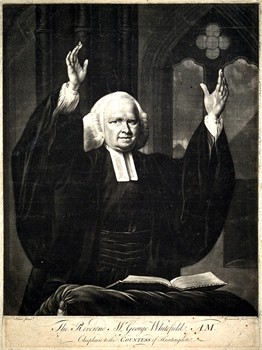
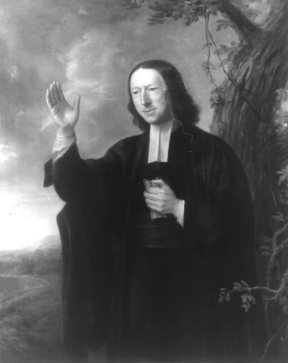
whitefield JohnWesley

(Left: George Whitefield; Right: John Wesley. Two men who differed greatly concerning election, yet for all their differences, accorded the other as being very devout and godly men. Should we disagree, may we be as charitable.)

----------------------------------------------------------

Sunday morning, in a group prayer before worship service, one of the fellows in the group quoted 2nd Peter 3:9 in the usual manner we hear so many people (mis)use it so often. Now, keep in mind, I dearly love this brother and I am not going to call someone a heretic just because they think this verse means that God wants every single person to be saved. But this IS the word of God we are talking about, and we do need to understand what God is saying, and what He is NOT saying. With that in mind, and with humble submission to His word, let us delve into this passage. And to do so, to keep it in context, we actually have to go back to verse 1, and begin there. That said, here is the passage in its entirety. 2nd Peter 3:1-9--
1 Beloved, I now write to you this second epistle (in both of which I stir up your pure minds by way of reminder), 2 that you may be mindful of the words which were spoken before by the holy prophets, and of the commandment of us, the apostles of the Lord and Savior, 3 knowing this first: that scoffers will come in the last days, walking according to their own lusts, 4 and saying, "Where is the promise of His coming? For since the fathers fell asleep, all things continue as they were from the beginning of creation." 5 For this they willfully forget: that by the word of God the heavens were of old, and the earth standing out of water and in the water, 6 by which the world that then existed perished, being flooded with water. 7 But the heavens and the earth which are now preserved by the same word, are reserved for fire until the day of judgment and perdition of ungodly men. 8 But, beloved, do not forget this one thing, that with the Lord one day is as a thousand years, and a thousand years as one day. 9 The Lord is not slack concerning His promise, as some count slackness, but is longsuffering toward us, not willing that any should perish but that all should come to repentance.

When studying any passage of Scripture, certain things need to be considered:
  1. Who was it written to?
  2. Why was it written?
  3. What idea was the author trying to convey?
So, let's take these one at a time.

1) Who was 2nd Peter written to?

To answer this question we can look immediately at 2nd Peter 3:1, and we can also go back to 1st Peter 1:1-2 as well as 2nd Peter 1:1.
1st Peter 1:1-2--Peter, an apostle of Jesus Christ, to the pilgrims of the Dispersion in Pontus, Galatia, Cappadocia, Asia, and Bithynia, elect according to the foreknowledge of God the Father, in sanctification of the Spirit, for obedience and sprinkling of the blood of Jesus Christ.
2nd Peter 1:1--Simon Peter, a bondservant and apostle of Jesus Christ, to those who have obtained like precious faith with us by the righteousness of our God and Savior Jesus Christ.
2nd Peter 3:1--Beloved, I now write to you this second epistle...

So, this letter was written to the same people who received his first letter. These are, of course, believers--saints, holy ones, the saved, the brethren, the elect.

2) Why was it written?

It was written for two reasons:
  • A) To warn believers that there would come into their midst false teachers who would bring destructive heresies. As he writes in 2nd Peter 2:1-3--But there were also false prophets among the people, even as there will be false teachers among you, who will secretly bring in destructive heresies, even denying the Lord who bought them, and bring on themselves swift destruction. And many will follow their destructive ways, because of whom the way of truth will be blasphemed. By covetousness they will exploit you with deceptive words; for a long time their judgment has not been idle, and their destruction does not slumber.
  • B) To encourage believers to continue looking for the return of our Lord Jesus Christ. He had to do so because there were many who were saying that because Christ had not returned yet that He wasn't going to. 2nd Peter 3:3-4--scoffers will come in the last days, walking according to their own lusts, 4 and saying, "Where is the promise of His coming? For since the fathers fell asleep, all things continue as they were from the beginning of creation."

3) What idea was the author trying to convey?

Peter's message in this epistle is simple: Just because Christ has not returned yet does not mean He isn't going to. In 2nd Peter 3:2-3, he encourages the reader to be mindful of the words which were spoken before by the holy prophets...knowing that scoffers will come in the last days. He is exhorting them to remain faithful to the One who is always Faithful, and to wait for His appearance with patience, and to be found without spot and blameless, and consider that the longsuffering of our Lord is salvation (2nd Peter 3:14-15).

So, what does this all mean for 2nd Peter 3:9? Does this mean that the way the Arminian views this verse is not correct? Or does this verse teach that God desires all men to be saved? (After all, isn't that what we read in 1st Tinothy 2:4? Well, more on that verse another time). To answer these two questions: this verse DOES NOT TEACH that God wants ALL PEOPLE to be saved.

So...
  • Who is this written to? The saved, the brethren, the elect.
  • Why was it written? Because there were going to be false teachers slithering their way into the church.
  • What was the idea he was trying to express? To exhort the saved, the brethren, the elect to continue looking for the second coming of Christ.
Which brings us to 2nd Peter 3:9. The Lord is not slack concerning His promise. Here we have what I call a "throwaway phrase." It's one of those phrases that many people just kinda skim over, they repeat it because it's there--but otherwise, they usually chop it out. Can we do that with ANY Scripture? God forbid! If the Holy Spirit spoke it, um, do you think there might be a REASON? Absolutely!

The Lord is not slack. Why does he say that? To stir the people up to patience, to remind them that if God promises something, He will do it (cf. Philippians 1:6), to keep them grounded in their faith to God.

The Lord is not slack concerning His promise. STOP! LOOK AT THE WORD 'PROMISE.' Is this singular, or plural? Singular! I will be forever indebted to A. W. Pink for pointing this out (in The Soverignty of God). The word 'promise' is singular, as in 'promise,' not 'promises.' So, what is the promise he is speaking of? The promise of Christ's return. God is not tardy concerning the return of our Lord.

The Lord is not slack concerning His promise as some count slackness. These false teachers were going to come along and say, "See, Jesus hasn't returned yet! Didn't He say He was coming again 'Soon'?" But that is man's reckoning. God does things in His own timing. Which is why Peter wrote in the preceding verse that with the Lord one day is as a thousand years, and a thousand years as one day. (We won't go into how Theistic Evolutionist types jerk this verse out as some kind of 'proof-text'). If God tarries 10,000 years--is that not 'soon' for Him? He is eternal, what's a few years?

The Lord is not slack concerning His promise, as some count slackness, but is longsuffering toward us. STOP!! STOP RIGHT THERE!!! Here we come to the crux of the matter. WHO is God longsuffering toward?? US!! Who is US? Is it the lost? Is it the entire world? NO!! He is longsuffering toward THE ELECT, THE SAVED, THE BRETHREN. (Note: some translations say He is longsuffering toward "you" instead of "us", a simple matter of whether the Greek is "umas" (you, pl.) or "hmas" (us). However, this does not change the meaning, as "you" would STILL be referring to the saved/brethren/elect.)

Which brings us to where Peter says that God is not willing that any should perish but that all should come to repentance. Two questions to ponder:
  1. Who is the "any" He is not willing should perish? Say it with me! The saved, the brethren, the elect. He is not willing that any He has chosen should perish before the coming of our great God and Savior Jesus Christ. If He has chosen one to be saved, then that person shall not perish until they have come to salvation.
  2. Who is the "all" that will come to repentance? You know. God is not willing that any of the saved/brethren/elect should die without repenting of their sins and trusting in Christ as their Savior. This is what Methodists refer to as "prevenient grace." They believe it to be the grace of God in prolonging the life of a person until they have had the chance to repent. They are close--oh, so close--but as much as I admire John Wesley, I believe this is where we must disagree, for the grace of God in prolonging the life of one (such as I) is not so they have the chance to be saved--but because He chose them before ever the world began, He will prolong the life of His elect until they are saved!
I do hope this has helped to shed some much-needed light on a passage that is so misunderstood by many well-intentioned people (and by some not-so-well-intentioned). We must never discount ANY words of Scripture, for they are given for our edification and that we may grow in grace and knowledge.

The grace of our Lord Jesus Christ be with your spirit!