27 February 2009

Stop the Terrorist Memorial blogburst (2/27/2009)

Mother of Flight 93 hero calls for “a full and transparent review” of the crescent-shaped memorial.


Blogburst logo, petition

For two years, Tom Burnett Sr. has been speaking out against the crescent-shaped memorial to Flight 93. This week Beverly Burnett (mother of Flight 93 hero Tom Burnett Jr.) stepped into the public eye to support her husband, and to make her own appeal for a full investigation:
Today, I am adding my voice for a full and transparent review of the National Park Service and Flight 93 design selection process that produced Crescent of Embrace. Does it have Islamic symbols or doesn’t it? Let's settle this once and for all.

Why do you think Tom Sr. opposed this design? It is pretty simple; Tom Sr. saw the Islamic symbols and knew those symbols did not belong at the crash site of Flight 93.

Tom Burnett Sr. traveled to Pennsylvania last August to attend the Task Force Meeting to voice his opposition to the memorial design. A Family Board member as well as a commissioner accused Tom Sr. being “just like the Islamic terrorists” that killed our son.

Why didn’t someone speak up and defend Tom Sr.’s right to voice his opinion?
Thanks to The Somerset Daily American for publishing Mrs. Burnett’s complete statement, which she also entered into the record of the most recent Memorial Project meeting. Read the whole thing.


Two other mentions of the memorial controversy in the local PA press this week

In a letter to the editor, a local woman echoed Mrs. Burnett’s sentiment in favor of preserving the site as it is, instead of demolishing the highly regarded Temporary Memorial and radically transforming the landscape, as the Memorial Project intends.

At present the Temporary Memorial looks down over the “field of honor.” Because this temporary memorial is located roughly in the center of the planned half-mile wide crescent, it will be eliminated. Visitors who stand at the location of the Temporary Memorial will no longer look out over the original landscape, but will instead see the crash-site framed between the pincer tips of the giant Islamic-shaped crescent.

They call the crescent a broken circle now, but the unbroken part of the circle, what symbolically remains standing in the wake of 9/11 (originally called the Crescent of Embrace) remains completely unchanged.


Nice words from a local columnist, but no fact-checking

In the area’s second local paper, The Johnstown Tribune-Democrat, columnist Ralph Couey offers a very nice tribute to the heroes of Flight 93 in which he mentions Mr. Burnett’s opposition to the planned memorial. Unfortunately, Mr. Couey goes on to describes Mr. Burnett’s opposition as “hopeless intransigence,” and expresses his optimism that it can be gotten past.

Given that newspapers are supposed to get to the truth, one would hope that those who gain the privilege of this public platform would bother to check the facts. If Mr. Burnett is correct in his warnings about Islamic symbolism, then finding a way to get past these objections is like finding a way to sneak a hijacker past gate security. It is a bad thing, not a good thing.

The petition that Mr. Burnett sponsored along with our blogburst group lists four damning facts about the approved design that can all be verified in a matter of minutes. Can Mr. Couey check just one: that a person standing between the tips of the giant crescent and facing into the center of the crescent will be facing within 2° of Mecca?

QiblaOverlaidOnCrescent,400px

The Muslim prayer direction in this animation (qibla) is from the Mecca-direction calculator at Islam.com. (If you have trouble getting their calculator to work--your Java has to be configured correctly--there is another Mecca direction calculator at QiblaLocator.com.)

This Mecca-orientation makes the giant crescent a mihrab, the Mecca-direction indicator around which every mosque is built. Does Mr. Couey really want to see the world’s largest mosque planted on the Flight 93 crash site? It is fine to speak highly of the heroes of Flight 93, but it would be a lot more meaningful if he would honor the Burnett’s urgent appeal for fact-checking by stepping over to a globe and checking this one simple factual claim.

Mr. Couey is not the only one who wants the crescent controversy to go away without caring to know the truth. Sorry, but that is insufficient. Planting a giant Mecca-oriented crescent on the crash-site will dishonor the heroes of Flight 93, and it fails to follow their example. They didn’t just have good intentions. They got the job done, and we have to get the job done too. We can’t be asleep at the wheel while an al Qaeda sympathizing architect hijacks our memorial.

What? Is it just too outlandish to think that the enemy might try to hijack one of our memorials? The same way that it is just too outlandish to think that the enemy might dare to hijack our commercial airliners? Do these people even know what they are memorializing?

But they CAN wake up. All they have to do is actually check the facts. Then they will know. So please Mr. Couey, take the time to check a few facts, then write a second column, reporting your findings. Somebody out there in Somerset needs to start telling the truth. It might as well be you.


To join our blogbursts, just send your blog's url.

1389 Blog - Antijihadist Tech
A Defending Crusader
A Fine Line Between Stupid and Clever
A Liberal's Worst Nightmare
ACT Golden Gate
Al Salibiyyah
All American Blogger
Almost Midnight in the West
American Commentaries
And Rightly So
Anne Arundel Maryland Politics
Alamo City Pundit
ARRA News Service
Atlas Shrugs
Auntie Coosa Campfire Journal
Bare Naked Islam
Battle Dress U
Because I'm Right
Best Destiny
Big Dog's Weblog
Big Sibling
Blackboot Jacks
blogito, ergo, sum
Bob McCarty Writes
Boston Maggie
Cao2's Weblog
Cao's Blog
Chaotic Synaptic Activity
Chester Street
Chicago Ray
Christmas Ghost
Classic Liberal
Clay Ritter
Clay's Rants and Musings
Cocked and Loaded
Colonel Robert Neville Always Dresses for Dinner
Common Sense Junction
Concrete Bob
Covertress
Creeping Sharia
DC Protest Warrior
Democrat = Socialist
Dr. Bulldog and Ronin
Error Theory
EW1's Intercept Log
Faultline USA
Flanders Fields
Flopping Aces
Founding Fathers of the Vast Right Wing
Four Pointer
Francase Place
Freedom's Enemies
Freedom Warrior
Fried Green Onions
From My Position On the Way!
Ft. Hard Knox
Freedom Ain't Free
Garbanzo Toons
General Rachel's weblog
GM's Corner
Green Country Values
Gunservatively
Haid Dasalami
Hard to Swallow
Holger Awakens
Hollywood Conservative
Hoosier Army Mom
iOwnThewWorld.com
Ironic Surrealism v3.0
Ivy League Conservatives
Jack Lewis
Jihad Press
Jim-Rose - the Libertarian Popinjay
Judge Right
Just Barking Mad
kae's bloodnut blog
Kender's Musings
Lemur King's Folly
LGF 2.0: Little Green Blogmocracy
Maggie's Notebook
MELAMPUS'S MENAGERIE!!!!
Miss Beth's Victory Dance
Monkey in the Middle
Muslims Against Sharia
My Own Thoughts
Neoconstant
Nice Deb
No Apology
No Compromises When It Comes To Being Right!
Noli insipientium iniurias pati
Not A Sheep
Redesigned Flight 93 memorial still an Islamo-fascist shrine
Ogre's Politics and Views
Old Soldier
Papa Mike's blog
Part-Time Pundit
Political Islam
Principally Political
Protest The Church
Protest The Left
Publius' Forum
Race, Politics, and Religion in the USA
Rayra.net
Republican Attack Machine
Right on the Right
Right Truth
Ron's Musings
Rosemary's Thoughts
Sarah Palin in EspaƱol
Seattle Express
Sharia Finance Watch
Sheepdog Barking
Shot in the Dark
Sad Old Goth
Smooth Stone
Space 4 Commerce by Brian Dunbar
Stix Blog
Stop the ACLU
Teen Pundit
the Avid Editor
The Conservative Guy
The Gadfly
The Great Lie of Islam
The Grid
The Hinge of Fate
Liberalguy
The Loyal Eagles
The Midnight Sun
The Mountain
The Paradigm Shift
The Political Octagon
The Renaissance Biologist
The Sanity Sentinel
The Sisyphus Files
The Strata-Sphere
The Truth of Islam
The View From the Turret
The Wide Awakes
Talk Wisdom
Thunder Run
Tizona's Weblog
Tough Girl 101
Traction Control
United Conservatives
War of 2 Worlds
We Have Some Planes
Yes, but can I dance to it?

26 February 2009

A sketch of Paul the apostle

We often think of those we call “heroes of the faith”—men like Abraham and Moses and King David, Esther and Sarah, and Rachel. It’s easy for us to make these people out to be these larger-than-life figures that we could never understand, we could never be like these people, or, “How can I learn from what happened to King David way back then?” Very easily. One thing we need to remember is that these were real men and women. These are not fictional, made-up figures of someone’s imagination. These were men and women who were made of flesh and blood just like you and me. They had their faults, they made mistakes, they doubted God, and they sinned against God. Yet if you read the “Roll call of faith” in Hebrews 11, it mentions these folks who are called “faithful.” By faith…Abraham obeyed…Sarah conceived…Isaac blessed Jacob…Moses forsook Egypt…the harlot Rahab…Gideon...Samson...Jephthah...David. All these people are held up in the Scriptures as being “faithful.” Being used by God. In fact, Abraham, Sarah, Isaac, Jacob, Rahab, David are all in the ancestral line of Christ.

Why? Because God uses imperfect people. No kidding! Imperfect people—kinda like saying “There’s some cold snow coming down.” Just like there’s no other kind of snow besides cold, there are no other kinds of people other than imperfect. How can we relate to the people mentioned in the Bible? Because they were just like us. Imperfect, doubting, sinful. Yet God used them. And today we are going to talk about one man that God used greatly to spread the gospel very quickly after the death and resurrection of Christ. If you’ve been here a while you’ve heard me mention a fellow by the name of “the apostle Paul.”

In Acts chapter 7, starting in about verse 54, there is a young man named Stephen, who is speaking to a group of devout Jews who rejected this Christ. In fact in the previous chapter it says Then there arose some from…the Synagogue…disputing with Stephen. And they were not able to resist the wisdom and the Spirit by which he spoke. Stephen goes through the history of Israel, how they were always rebelling against God and killing His prophets, and that finally God sent His own Son and they rejected Him and killed Him as well.

Then it says, Acts 7:54When they heard these things they were cut to the heart, and they gnashed at him with their teeth. But he, being full of the Holy Spirit, gazed into heaven and saw the glory of God, and Jesus standing at the right hand of God, and said, “Look! I see the heavens opened and the Son of Man standing at the right hand of God!” Then they cried out with a loud voice, stopped their ears, and ran at him with one accord; and they cast him out of the city and stoned him. And the witnesses laid down their clothes at the feet of a young man named Saul. Now, whenever they stoned someone, they didn’t just pick up rocks out of their driveway and pelt the person with little stones. The person was literally crushed under boulders. So these men, who did not want to hear that they had killed the Messiah—the Anointed of God they had been looking to for thousands of years—they don’t like the message, so they did what anybody else does when they odn't like the message--they killed the messenger. And so they take off their robes and they hand them to a young man named Saul.

Saul was a Pharisee. He studied under one of the most famous rabbis in Jewish history, a man named Gamaliel. This would be like learning football from Vince Lombardi. Gamaliel was the most widely respected rabbi in all of Israel at the time. And this young man named Saul was his prize pupil. This Saul was such a devoted student that he would gladly go out searching for Christians and take them to Jerusalem to be killed. For blasphemy. If you recall, when the Jews were calling for Pilate to crucify Christ they said that “According to our laws, He is a blasphemer and He must die!” And Pilate said, “Psshaw on your laws, this is my territory!” And we see in Acts 7:59 and going through the first part of 8:1And they stoned Stephen as he was calling on God and saying, “Lord Jesus, receive my spirit.” Then he knelt down and cried out with a loud voice, “Lord, do not charge them with this sin.” And when he had said this, he fell asleep. Now Saul was consenting to his death. This Saul basically said, “Yep, he’s a blasphemer. He must die.”

That was his job. To make sure that anyone who confessed Jesus Christ as Lord should die. He went from city to city seeking those who worshipped Christ. And he was very efficient at his job. Now, if this was a movie, and Saul is the bad guy, we would expect him to die a very explosive death at the end, would we not? But that’s not always how God works. Saul is allowed to continue executing his duties--and executing Christians--for another couple of years.

In fact we find this in the next verses—At that time a great persecution arose against the church which was at Jerusalem; and they were all scattered throughout the regions of Judea and Samaria, except the apostles. And devout men carried Stephen to his burial, and made great lamentation over him. As for Saul, he made havoc of the church, entering every house, and dragging off men and women, committing them to prison. So for Saul, everything’s going good. He’s learning from the finest school for rabbis, he’s probably next-in-line to take it over, he’s got fame and admiration from his peers, he’s probably making good money, and he thinks he’s serving God by carrying Christians to their death.

I want to point out something in this passage. Look at verses 3-4As for Saul, he made havoc of the church, entering every house, and dragging off men and women, committing them to prison. Therefore those who were scattered went everywhere preaching the word. Therefore—they didn’t stop preaching Christ—they went out and preached it. They didn’t stay home in their houses, and in fact they were more bold in their witness by taking it to the people. This Saul had the power to go into people’s houses, drag them out and throw them in prison for preaching Christ. Don’t think that won’t happen in this country one day. It’s already happening in Britain and in Canada.

Then we read about Phillip and the Ethiopian, and Simon Magus (a sorcerer that tried to buy the Holy Spirit from Peter and John), so we fast forward to the beginning of chapter 9. Then Saul, still breathing threats and murder against the disciples of the Lord, went to the high priest and asked letters from him to the synagogues of Damascus, so that if he found any who were of the Way, whether men or women, he might bring them bound to Jerusalem. Apparently Damascus was out of his jurisdiction, so he had to get what would today amount to an extradition order.

But ya know, is there ever a time when God doesn’t know what’s going on? This Saul had been going around, killing Christians. Did God know this was happening? I think He had an idea this might be happening. So here is Saul, on his way to collect a bounty in another region of the Middle East, and all of a sudden, Jesus says, “OK, now that I've got you alone, we need to talk.” And in verses 3-9--I just gotta read this from the King James--And as he journeyed, he came near Damascus: and suddenly there shined round about him a light from heaven: And he fell to the earth, and heard a voice saying unto him, Saul, Saul, why persecutest thou me? And he said, Who art thou, Lord? And the Lord said, I am Jesus whom thou persecutest: it is hard for thee to kick against the goads. And he trembling and astonished said, Lord, what wilt thou have me to do? And the Lord said unto him, Arise, and go into the city, and it shall be told thee what thou must do. And the men which journeyed with him stood speechless, hearing a voice, but seeing no man. And Saul arose from the earth; and when his eyes were opened, he saw no man: but they led him by the hand, and brought him into Damascus. And he was three days without sight, and neither did eat nor drink. If you ever hear the phrase “Damascus Road experience”—that’s where it comes from. When a person is rebellious and hard-hearted against God, God gets a hold of the person and tells them “You're mine” and they become a whole new person, they say they had a "Damascus Road experience", this is where it comes from. This is how Saul met the risen Christ.

Now, I'm supposed to be talking about Paul, so who is this “Saul?” Well, in chapter 13 we read that Saul, who also is called Paul… This is where we find that this Saul has changed his name to Paul. Saul was his Hebrew birth name. However, because he was born in a Roman colony, he was officially a Roman citizen, so in order to go out and take the gospel to Gentiles he referred to himself by his Roman name, Paul. In Romans 3:29, Paul writes, Or is He the God of the Jews only? Is He not also the God of the Gentiles? Yes, of the Gentiles also. If Paul was going to convince Gentiles that God is not just "the Jewish God," he would be more able to relate to Gentiles if he went by a Gentile name. And, according to some people, if he cussed and told dirty jokes.

Now wait a minute! You mean to tell me that one day this guy is arresting Christians and taking them to slaughter, and a couple days later he’s preaching Christ?” Yes. Flip back to Acts 9:13. Paul is sent, by God, to the house of man named Ananias. God tells Ananias, "Arise and go to the street called Straight, and inquire at the house of Judas for one called Saul of Tarsus, for behold, he is praying." Ananias answered, “Lord, I have heard from many about this man, how much harm he has done to Your saints in Jerusalem. And here he has authority from the chief priests to bind all who call on Your name.” Ananias says, basically, “Wait, wait, wait! Who of Where?” But the Lord said to him, "Go, for he is a chosen vessel of Mine to bear My name before Gentiles, kings, and the children of Israel." We don’t understand that. But many times God calls us to embrace someone who has caused us pain and grief. Ananias went out, found Saul, took him into his house and fed him. Verses 19-20So when he had received food, he was strengthened. Then Saul spent some days with the disciples at Damascus. Immediately he preached the Christ in the synagogues, that He is the Son of God. So yes, one day he’s killing Christians, and a few days later he is preaching Christ.

Can you imagine what the disciples of Christ were thinking? "Yeah, Saul got saved! Congratulations, welcome to the family!" Not quite. This was not Purpose-Driven™ church. They needed a little more proof than someone saying a little prayer. Verse 21Then all who heard were amazed, and said, “Is this not he who destroyed those who called on this name in Jerusalem, and has come here for that purpose, so that he might bring them bound to the chief priests?” They were cautious. Certainly, if this were true (and it was), it was cause for wonder and amazement. But in a situation like this, caution is a very natural sentiment. "He’s just here to spy us out and to arrest us." But look down in verse 26, And when Saul had come to Jerusalem, he tried to join the disciples; but they were all afraid of him, and did not believe that he was a disciple. But Barnabas took him and brought him to the apostles. And he declared to them how he had seen the Lord on the road, and that He had spoken to him, and how he had preached boldly at Damascus in the name of Jesus.

Now, some folks might wonder, “Well, why would God choose a man like Saul? I mean, this guy was a murderer; he opposed the gospel so harshly. Why wouldn’t He use one of the apostle who followed Christ and who were so faithful to Him?” Who better to preach Christ and show Christ from the Scriptures—and, which Scriptures did they have at that time? Did they have the New Testament? No. All they had was the Old Testament. And who, at this time, was the most knowledgable and most well-trained Old Testament scholar in Jerusalem? For someone to show Christ from the Scriptures, they had to have a pretty good knowledge of the Law and the Prophets—the Old Testament. That someone was Saul of Tarsus.

So, after he meets the risen Christ on the road to Damascus, he goes out and preaches Christ. This is about the year 34 AD—about maybe a year or two after the death and resurrection of Christ. He spends the next 20-25 years going around Greece and Syria and Turkey and Israel preaching Christ and planting churches. If you read the rest of the book of Acts, it gives you rather detailed account of Paul’s life after he met Christ. And I say “detailed”--as detailed as you can get in a relatively short volume. Luke, who wrote Acts and the book of Luke—which were probably one book when he wrote—he manages to cram a whole bunch of information into such a short space. We don’t have ALL the details of Paul’s life in the Scriptures, but we can build a pretty decent biography from Acts and from Paul’s letters.

Now, the books of the Bible that Paul wrote—from Romans to Philemon—they are actually letters that he wrote.

  • Romans to Thessalonians were letters to different churches to deal with some kind of false teaching, or to comfort, strengthen a church in a certain city.
  • Timothy, Titus, Philemon—these were written to individuals.
  • Timothy and Titus were for teaching about what is expected of a church elder.
  • Philemon was written to show that we are not just simply people that go to church together—we are indeed brothers and sisters in Christ.
Now, it would be real easy for Paul to be conceited, to think he was better than anybody else because God used him so greatly. But listen to how he described himself in his letters.

Romans 1:1Paul, a slave of Jesus Christ.
1st Corinthians 1:1Paul, an apostle of Jesus Christ through the will of God.
1st Corinthians 15:9--the least of the apostles
Galatians 1:1Paul, an apostle (not from men nor through man, but through Jesus Christ and God the Father who raised Him from the dead).
Philippians 1:1Paul, a slave of Jesus Christ.1st Timothy 1:15--chief of sinners.
Philemon 1:1Paul, a prisoner of Christ Jesus.

He could have bragged, he could have boasted, he could have gloried in himself because he was so special that God picked him. But Paul realized that God did not call him because he had done something to impress God that made God say, “Ooh, wow! I have to use him! He is so wonderful!” He knew that it was not because of anything he did that made God sit up and notice. But rather it was God who called him for no other reason than the good pleasure of His will.

Romans 7:18, 24For I know that in me nothing good dwells…O wretched man that I am! Who will deliver me from this body of death?
Galatians 1:15-16…it pleased God, who separated me from my mother’s womb and called me through His grace, to reveal His Son in me, that I might preach Him among the Gentiles…Galatians 6:14But God forbid that I should boast except in the cross of our Lord Jesus Christ, by whom the world has been crucified to me, and I to the world.
Philippians 3:4-7If anyone else thinks he may have confidence in the flesh, I more so: circumcised the eighth day, of the stock of Israel, of the tribe of Benjamin, a Hebrew of the Hebrews; concerning the law, a Pharisee; concerning zeal, persecuting the church; concerning the righteousness which is in the law, blameless. But what things were gain to me, these I have counted loss for Christ. In fact he goes on to say that those things he counted gain—the respect of his peers, the admiration, the applause, the accolades—for Christ, he suffered the loss of all things, and do count them but dung, that I may win Christ.

So that’s who this Paul fellow was. He was an expert in all things that had to do with the Old Testament. He was a man who went about killing Christians and delivering them to their deaths. One day while he was doing his job, the Lord Jesus Christ appeared to him, saved him, and used him to proclaim the name of Christ throughout the land. The books we have here are letters he wrote to correct false teaching, to demonstrate true teaching, to comfort us, to give us hope in Christ, to show us how to serve God, show us why He deserves our worship and show us how to find eternal life in Christ.

19 February 2009

How we got the Bible--part 2

Last week we talked about the “Who”—who did the writing and the collecting. We saw that the men who wrote the Old Testament—men like Isaiah and Ezekiel--were prophets of God. We saw that the men who wrote the New Testament were either apostles or they followed Christ or an apostle. Matthew, and John and Peter were apostles of Christ while He walked the earth. Paul was an apostle of the risen Christ. Mark and Luke traveled with Christ and with Paul and with Peter. We looked at “Who” put together the 66 books that make up our Bible. There are many cults that try and say that emperor Constantine commanded people everywhere to believe what he believed. That’s nonsense. The books of the Bible were very carefully selected, very carefully considered, as far as whether or not they came from God. The decision to consider which books were actually spoken by God was a very delicate matter. It's more a case of –well, kinda like the earth isn't round because we say it’s round—we say it’s round because it is round. I found this quote from a fellow named Mortimer Adler. “We do not make statements true or false by affirming or denying them. They have truth or falsity regardless of what we think, what opinions we hold, what judgments we make.” A Mormon may want with all his heart for his Book of Mormon to be true—but all the wishing in the world is not going to make it so.

Then we looked at the “Why?” Why did God speak His word to us? We saw number one was so that we may know Him. Every single person who ever lives knows that there is something or someone greater than themselves—but they may not know God specifically. They may build statues and temples to honor the one they think is the Creator. But in order for us to know God, then He needed to speak His word to us so we could know Him and obey Him. And also that we may know Jesus Christ, and we may know that we have eternal life in Him. So, with all that out of the way, let’s continue by looking at “What?”

What books do we have to show us God and to show us how to find eternal life in Christ? Before we do that, however, I want to take a moment and look at what books have been left out. And why? A word we’re going to talk about real quick is the term “Apocrypha.” The word literally means, “hidden” or “concealed.” If you go into a Catholic Church, or many Episcopal churches—they're actually kinda joined at the hip; Episcopals are really just Catholics who can be gay and can get divorced—you will find that their Bibles have about 80 books in them, whereas a Baptist or Methodist or Pentecostal church will only have 66. Which one is correct? The one with 66. There are 15 books in the Apocrypha. Books like 1st and 2nd Macabees, Judith and Tobit and Esdras.

Why are these books not in Protestant Bibles? Or, rather, why are they in Catholic Bibles? They are in Catholic Bibles because without them Roman Catholicism would not have a lot of their beliefs. Salvation by works comes from Tobit 4:11“For alms deliver from all sin, and from death, and will not suffer the soul to go into darkness.” 2nd Macabees 12:43And making a gathering, he sent twelve thousand drachmas of silver to Jerusalem for sacrifice to be offered for the sins of the dead, thinking well and religiously concerning the resurrection.

Ever hear the word “Purgatory?” This is where the Papists developed their system called “indulgences.” Send us your money, and grandpa gets a hundred years knocked off of his time in Purgatory. Johann Tetzel, the famous Roman priest who went around Wittenburg selling indulgences--the action that led Martin Luther to nail his 95 Theses to the door at Castle Chruch (not, as many people believe, to split from Catholicism, but rather to reform it)--Tetzel is famous for making this sales pitch--

As soon as a coin in the coffer rings
the soul from purgatory springs.”

Some more errors in the Apocrypha:
  • Judith 1:5Now in the twelfth year of his reign, Nebuchadnezzar king of the Assyrians, who reigned in Nineveh the great city, fought against Arphaxad and overcame him. Nebuchadnezzar was not the king of the Assyrians, he was the king of the Babylonians.
  • Baruch 6:2“And when you are come into Babylon, you shall be there many years, and for a long time, even to seven generations: and after that I will bring you away from thence with peace.” Baruch 6:2 says the Jews would serve in Babylon for seven generations where Jeremiah 25:11 says it was for 70 years. Jeremiah 25:11--“And this whole land shall be a desolation and a horror, and these nations shall serve the king of Babylon seventy years.”
Now remember, one test of a book’s inclusion was it could not have any errors. Since these books contain obvious errors, it’s pretty cut and dried that these could not have come from God. So, what books are included? We believe the 66 books from Genesis to Revelation (excluding the Apocrypha)are those Scriptures which were breathed out by God.

And as I mentioned before, it’s not a narrative story. It’s not something that was written to entertain us. It was written so that we may know God. Some people will ask, “Well, why isn't it easier to understand?” Because God knows how our minds work. If it was too easy, we would read it once, put it down, and probably never pick it up again. You read a comic book, maybe a couple times, then out it goes. The reason the Bible—it’s not really hard to understand, but you do have to study.
2nd Timothy 2:15Be diligent to present yourself approved to God, a worker who does not need to be ashamed, rightly dividing the word of truth. God made this word in a way that we would have to number one, seek Him and His wisdom to understand. Because He wants His children to know that He is willing to give us whatever we need. But also, He spoke it so that we would set time aside to study it, to not just rush through it. That’s why it’s called the HOLY Bible. That word “holy” means “set apart.” We are to “set apart” time to study this book that is “set apart” from all other books.

The word “Scripture” is used 53 times in the New Testament. When you see that word in the New Testament, keep in mind that until the New Testament was written, the only Scripture people had was the Old Testament. There’s a reason Jesus did not quote from 2nd Peter. It hadn't been written yet. In fact, one of the verses I used last week, 2nd Timothy 3:15from childhood you have known the Holy Scriptures, which are able to make you wise for salvation through faith which is in Christ Jesus. The only Scripture Timothy had was the Old Testament. So, in all actuality, read the Old Testament and find salvation through Christ. The Romish contention that "Sola Scriptura is not a concept found in Scripture" is asinine. The idea comes from Scripture itself--they just don't want to admit it. So, that’s the “What?”

The “Where” and “When” we really need to look at together. Where and when were the books of the Bible written? If you ever had a paper to write for school. Your history teacher said, “Your assignment is to write a 5-page paper on Ben Franklin” you could probably knock it out in your room in an hour. But books of the Bible are quite a bit different from a 5th-grade book report. The events they record, the ideas they express, didn’t just happen all at once. You pick up the paper and they have four or five stories on the same event. A warehouse fire, or the election. But some of the books of the Bible books contain, literally, a history that covers hundreds of years.

And as I mentioned earlier, they are not all arranged chronologically. If you go through your Bible, you will find that some books are placed before others, even though the events of the second took place before or at the same time as the first. The first book you find would be Genesis. However, many scholars believe that the book of Job was actually written before Genesis. Micah wrote at the same time as Isaiah. The same is true for the New Testament.

That said, it is truly amazing that we have the Bible we have, because the different parts were written over thousands of years in places thousands of miles apart. Of course, most of the Old Testament was written in Israel, whether in the desert, or in Jerusalem. But one thing we need to keep in mind is Israel did not always live in peace with its neighbors--or even with each other. What you see going on in the Middle East right now is about 5000 years old. Twice the nation of Israel was taken captive. Once into Babylonia, modern-day Iraq. And once into Assyria. Not Syria, but Assyria. A nation that does not exist anymore, but they literally bordered Babylonia. It was kinda like Minneapolis/St. Paul. They didn’t like each other. But they didn’t like the Jews even more. For many years, Israel was divided into two kingdoms, Israel and Judah. So there were times when Israel was threatened with being wiped out. The book of Esther tells about one such instance. The book of Daniel was written during one of these captivities. The books of Jeremiah and Joel also; Nehemiah, Ezra.

The fact that these books have survived these thousands of years, shows that what we have today is truly a work of God. And the same is true for the New Testament. We are reading through Philippians. Philippians was written to a church in a city controlled by Rome, which spent about a couple, three hundred years doing everything it could to destroy the church. if you were found to be a Christian—one who worshipped Jesus Christ as Lord—you could either confess, renounce Christ, and be spared. Or you could be killed in some of the most horrific ways imaginable. Yet the church grew, and it grew very quickly as a matter of fact. And the writings of men like Paul and Peter and James and Matthew, Mark, Luke, John, survived. And when you look at the Old and the New Testament, being written in such widely scattered places, and by about 40 different authors—some were farmers, some were prophets to kings, some were kings, some were fishermen, and some were tentmakers. And yet everything they wrote, all their words, all their writings, all pointed to one supreme truth—Our Lord Jesus Christ.

Now, some people might say, “Well, we don’t have the original writings of Moses and Isaiah and Matthew Mark Luke John. So how do you know that what we have here is actually what they wrote?” I'm glad you asked. When copies were made of the Scriptures—well, for one thing, did they have scanners and fax machines, and copiers? You may remember that old Xerox­™ commercial with the monk in a monastery, and the priest asks him to make 5000 copies of this book, and he sneaks into an office and runs them through a Xerox™ machine. Eh, not so much.

For the Old Testament, the process of copying was remarkable. It was very strict, very precise, you didn’t just, “Well, that’s a whole lot of words, is there an easier way to write that? Maybe I coould leave out a few words so it's not so hard to understand.” Today we have the Living Bible and the NLT, the CEV, and one dreadful one called “The Message.” These are “paraphrases.” They convey the meaning of the Scripture, but it's not a word-for-word translation. Jewish scribes did not paraphrase. I found an article that details what the Jewish scribes had to go through when making copies of the Scriptures:

1. They could only use clean animal skins, both to write on, and even to bind manuscripts.
2. Each column of writing could have no less than forty-eight, and no more than sixty lines.
3. The ink must be black, and of a special recipe.
4. They must verbalize each word aloud while they were writing.
5. They must wipe the pen and wash their entire bodies before writing the word "YHVH," every time they wrote it.
6. There must be a review within thirty days, and if as many as three pages required corrections, the entire manuscript had to be redone.
7. The letters, words, and paragraphs had to be counted, and the document became invalid if two letters touched each other. The middle paragraph, word and letter must correspond to those of the original document.
8. The documents could be stored only in sacred places (synagogues, etc).
9. As no document containing God's Word could be destroyed, they were stored, or buried, in a genizah - a Hebrew term meaning "hiding place." These were usually kept in a synagogue or sometimes in a Jewish cemetery.

It was a whole lot different than popping a quarter into a copying machine and spitting out 100 copies. Now, someone may say, “Yeah, that’s nice, but after Christ, they went back and changed the Old Testament to match what the New Testament said.” Not so fast there Hoss.

About 1947, a young boy was wandering out in the Qumran area of Judea, in Israel. He had lost the sheep or the goat or whatever animal it was that he was supposed to have been watching. so he's wandering around, calling out for it. He's frusrated, he picks up a stone, tosses it into a cave, and hears something shatter. Sounded like a clay pot. Well, come to find out, it wasn’t just “a” cave. It was a system of 11 caves, and there were many, many, clay jars containing over 800 very old papyrus scrolls. Among these scrolls, they found fragments of every book in our Old Testament, except for Esther. The contents of these scrolls were published between the years 1950-1956. And since these scrolls were found near the Dead Sea, what do you suppose they called them? Hey, you guessed it! These were the “Dead Sea Scrolls.”

Why are the Dead Sea Scrolls important? It is because they were found to have been written about 200 BC. 200 years before the birth of Christ. And one of the scrolls is of particular importance—they found 22 copies of the scroll of Isaiah. The entire book, all 66 chapters! Well, they didn't have chapters back then but you know what I mean. Isaiah wrote more prophecies about Christ than anyone other than probably King David. Much of the book of Isaiah is made up of prophecies about the Messiah. Isaiah 9:6 and Isaiah 7:14 and Isaiah 53 are some of the clearest prophecies about Christ. If any part of the Old Testament could be accused of being changed to make it sound like it was talking about Christ, it would be Isaiah. Guess what? After examining these scrolls of Isaiah, they found that the only differences were in the spellings of a few words, and none of these variations affected the meaning of what was written. In other words, what we have today as the book of Isaiah is probably pretty doggone close to what was originally written.

Now, how did we get it into English? Well, it wasn’t easy. The Roman Catholic system did not particularly care for people reading the Bible in their own language. Because if they did—well, the charge was, “People will teach heresies!” This coming from the mother of so many heresies. What they were actually afraid of was that people just might find that many of Rome’s teachings could not be found in the Bible. So the Roman Catholic system was very intent on making sure that anyone who dared translate the Bible into English was to be made......um, dead. The first man to translate the Scriptures into English was a fellow named John Wycliffe in 1380. He did not have the Greek or Hebrew, so he had to translate using the Latin Vulgate. He survived, died a natural death, but Pope Martin V, being as kind and gracious a tyrant as any of the medieval popes, ordered Wycliffe's bones dug up, crushed, and thrown into the River Swift.

The first man to translate the Bible out of the original languages was a fellow named William Tyndale in 1525-1526. He was the first to make an English translation from the Greek and Hebrew. Anmd although he finished the work, he was betrayed to Rome by a man he thought to be a friend, was ordered by to be strangled while being burned at the stake (Boy, gotta love those popes!)

Then about 85 years later, a group of about 50 scholars was commissioned, and using Tyndale's Bible and Coverdale's Bible, the Geneva Bible, the Great Bible, and a couple other English translations, they finished this new translation of, quote, “The Holy Bible containing the Old and New Testaments: translated out of the original tongues, and with the former translations diligently compared and revised, by His Majesty's special command” for the man who had commissioned the work, and can you guess who is being referred to as "His Majesty?" You guessed it, a fellow named King James I of England, in 1611.

Then of course you got the Revised Version, the New Revised Version, the New King James, the American Standard, the New American Standard, and so many more. So there is a rough overview of the Bible, from God to us. Again I would refer you to my previous post on this subject for more resources on how we got our Bible. Next week, we’re going to look at a thumbnail sketch of the apostle Paul, his life and why I keep talking about this guy so much.

12 February 2009

How we got the Bible--part 1

What follows here and next week is not an exhaustive study of the process by which God spoke His Scriptures to man and how they were preserved and copied and transmitted from one generation to the next. It is relatively rudimentary, and there are many very reliable works written on the subject, such as:

The New Evidence That Demands a Verdict by Josh McDowell
The Text of the New Testament by Bruce Metzger
The Authority of the New Testament by N.B. Stonehouse
A General Introduction to the Bible by Norman Geisler & William Nix
The King James Only Controversy by Dr. James White
The Books and the Parchments by F.F Bruce
The New Testament Documents: Are They Reliable by F.F. Bruce
ANYTHING by F.F. Bruce, for that matter!


Today we will begin a study of how we got what we call the Bible. When some new religion pops up, some new system that is totally against the truth, what is the first thing they attack? The word of God. Do you think it was an accident that the first lie that was ever spoken on earth was a direct assault against the word of God? Genesis 3:1Now the serpent was more cunning than any beast of the field which the LORD God had made. And he said to the woman, “Hath God indeed said…?” Many of the largest cults and false religions all started with one lie—“Hath God indeed said?” Islam says that the Bible was corrupted. The Watchtower Bible and Tract Society—the headquarters of Jehovah's Witnesses—says that their “translation” of the Bible is the only one that is correct because, they say, the Bible has been corrupted. Mormonism teaches that men have “taken away from the gospel of the Lamb many parts which are plain and most precious.” All these groups have one thing in common—they all cast doubt on the word of God.

Then of course you have your flat-out, Bible-hating atheists who call this a storybook, or a bunch of made-up fables. They're pretty easy to dismiss. Seems the popular thing to do today to make yourself sound like you're super-intelligent is to go around saying, “I’m an atheist. I'm too smart to believe all that God stuff.” BTW, who is it that says in his heart “There is no God?” But there are some systems that they will say they believe in the truth of the Scriptures, but you need someone to interpret them for you. Anybody know what is the largest system that teaches this? It's the Roman Catholic system, which says that you can't understand what the Bible says. “You can't understand the Bible. Leave that up to your priest and the Pope.”

So, let’s begin, and we’re going to begin by dealing with some myths and misconceptions about the Bible. First, the Bible does not contain the ideas of men. This was not cooked up by a bunch of guys sitting around a fire in the middle of the desert, saying “Hey, I got an idea! Let’s write a book about how everything came to be.” The words contained in here were not the ideas of men—these words come from God Himself. The most commonly used verse in the Bible that talks about the Bible is 2nd Timothy 3:16 (ESV)All Scripture is breathed out by God and profitable for teaching, for reproof, for correction, and for training in righteousness. We can also look at 2nd Peter 1:20-21knowing this first of all, that no prophecy of Scripture comes from someone's own interpretation. For no prophecy was ever produced by the will of man, but men spoke from God as they were carried along by the Holy Spirit. What we have in here comes from God. It is not a collection of stories invented by men—it is truth from God that was written down by men. Which brings me to my next point: not all the books in the Bible are arranged in chronological order. Now, from Genesis up through Esther, those books are in pretty much chronological order. Some of them overlap others—the books of Samuel and the Kings and Chronicles, then Ezra and Nehemiah and Esther. But after Esther, from Job through Malachi, the books are arranged not so much chronologically, but by the type of writing. From Job through Song of Solomon, we have the wisdom books. Then Isaiah through Daniel are the “major prophets.” Hosea through Malachi are the “minor prophets.” So don’t think of the Bible as just one long narrative story.

And it wasn’t written by one man or group of men at one time. The first five books—Genesis through Deuteronomy—these books were written about 1400-1500 years before Christ. The Psalms were written by several different authors over a period of many years. Most of them were written by King David. Then Isaiah lived about 750 years before Christ. Malachi, about 400 years B.C. Then we have the New Testament. Those books were written at various times anywhere between 20-60 years after the death and resurrection of Christ. They were not just written in one place. The Torah was written in what we know as Israel. Daniel was written in Babylon, what we now know as Iraq. The New Testament was written in Greece, Turkey, Italy.

Oh, and one final thing: Why do we have so many translations? Because the Bible was not written in English. It was not written in King James English, it was not written by King James. I actually had someone tell me one time, “Well, you know, when King James wrote the Bible…” The majority of the Old Testament was written in Hebrew. Parts of Daniel and Ezra were written in a language called Aramaic. It was a language that was close to Hebrew, spoken in Babylon back then. It’s extremely rare these days, and in fact is almost nonexistent anymore. Then the New Testament was written in Greek. These languages don’t always translate into English very well. You know how if you're going from Spanish to English, it's pretty much a word-for-word, 1:1 ratio of definitions from one into the other? Greek and Hebrew don't work that way. One Hebrew word can have six different English meanings. Greek is a little more specific, but it's still not always exact.

So, now we have those things out of the way—what is true about the Bible? Everything inside it. In our church's “Statement of Beliefs,” it says, "The Scriptures of the Old and New Testament were given by inspiration of God, and are the only sufficient, certain and authoritative rule of all saving knowledge, faith and obedience." Basically, we believe that the Bible is the Word of God, spoken by God so that we may know God. There are no errors in it, that everything contained inside was spoken to men by God, and that it is the full word of God. So, let’s take a look at how it came to us. And to do this, we’re going to look at the 5 “W’s”: Who, what, why, where, when. We already know “How.”

First, we’re going to look at the “WHY?” Why did God speak His word to us? Well, we find the answer to that question in the Bible itself. That verse I mentioned earlier, 2nd Timothy 3:16 (ESV)All Scripture is breathed out by God and profitable for teaching, for reproof, for correction, and for training in righteousness. And a lot of times, we end it there. But really, we should go on and include the next verse, which says, that the man of God may be competent, equipped for every good work. God spoke this word to us so that we can teach others about Him. We cannot know of the things of God unless He Himself shows us. 1st Corinthians 2:11-14…no one comprehends the thoughts of God except the Spirit of God…The natural person does not accept the things of the Spirit of God, for they are folly to him, and he is not able to understand them because they are spiritually discerned. We cannot know the things of God with the minds we are born with. Now, that is not to say we can't understand that there is a God. Romans 1:20 says, since the creation of the world His invisible attributes are clearly seen, being understood by the things that are made…so that they are without excuse. We know that there is a Creator. And when someone claims that they have never believed in God, they show their foolishness. In that same passage, it says, although they knew God, they did not glorify Him as God…they did not like to retain God in their knowledge. Like I said, Who says in their heart, “There is no God?”

Everyone knows, at one time in their lives, that there is a God. But some make themselves believe a lie. This is why God spoke His word to us, so that those of us who do retain God in our thoughts can know the things of God. Unless He reveals His thoughts to us, we cannot know them. Isaiah 55:9“For as the heavens are higher than the earth, so are My ways higher than your ways, and My thoughts than your thoughts.” He also gave us His word so that we may know Him, and His Christ. John 20:30-31Jesus did many other signs…which are not written in this book; but these are written that you may believe that Jesus is the Christ, the Son of God, and that believing you may have life in His name. 1st John 5:13These things I have written to you who believe in the name of the Son of God, that you may know that you have eternal life, and that you may continue to believe in the name of the Son of God. We don’t need a catechism. We don’t need a guy in Rome with a funny hat sitting in some big chair to tell us what to think. Of course, the Roman Catholic will try and tell you "You know, your doctrine of sola scriptura isn't in the Bible." Really? Then how do you explain 2nd Timothy 3:15…from childhood you have known the Holy Scriptures, which are able to make you wise for salvation through faith which is in Christ Jesus. Paul was telling Timothy that even from the Old Testament alone one can learn of salvation by faith. The salvation that is found in Christ ALONE. Romans 15:4For whatever things were written before were written for our learning, that we through the patience and comfort of the Scriptures might have hope. 1st Corinthians 10:11Now all these things happened to them as examples, and they were written for our admonition, upon whom the ends of the ages have come. 1st Corinthians 2:11-14no one knows the things of God except the Spirit of God…These things we also speak, not in words which man’s wisdom teaches but which the Holy Spirit teaches…the natural man does not receive the things of the Spirit of God, for they are foolishness to him; nor can he know them, because they are spiritually discerned. That’s the WHY. So we may know God, and we may believe on the name of Jesus Christ.

Now, for the "WHO?" And no, we're not talking about the rock band that smashes their guitars and they play their songs on CSI. Not only do we need to ask, “Who did the writing?” But we also need to ask, “Who decided what to put in the Bible?” First “Who did the writing?” Answer: A bunch of different writers that were moved by the Holy Spirit. The first 5 books were written by Moses. Most of the Psalms were written by King David. The first Psalm was probably written by Ezra. Books like Isaiah and Jeremiah, and Habakkuk and Haggai—were written by the men they were named after. The gospels were written by Matthew, Mark, Luke and John—no kidding! Luke also wrote the book of Acts, John wrote 1st, 2nd, 3rd John and Revelation. Paul wrote the books from romans to Philemon.

Now, not just anyone could write some letter or scroll and say, “This is Scripture!” although many people did try. And God had some harsh words for them. In OT times, if someone tried to prophesy, and that prophecy did not come to pass, what happened to that person? Deuteronomy 18:20, God commands the people, “…the prophet who presumes to speak a word in My name, which I have not commanded him to speak…that prophet shall die.” There are many fellows on TV that ought to be very thankful they didn’t live back then. Because they claim to be a “prophet of God.” Benny Hinn claims to speak things in the name of God that have not come to pass. If He had lived back then, to be as frank as I possibly can be, his body would be rotting under a pile of stones to this day. So that is one test of whether a particular writing was from God—if it was true. It had to be true, because God cannot lie.

The qualifications for a person to have their writing be accepted as being from God were:
  1. For the OT, that man had to be a true prophet of God. If the man was known to be called by God, and his prophecies had come to pass, and was known to be a true prophet, then if the man wrote, “Thus saith the LORD,” it was pretty well accepted that was what the LORD saith.
  2. For the New Testament, the person had to be either an apostle of Christ, or a close associate of an apostle. The basic factor for recognizing a book’s [value as Scripture] for the NT was divine inspiration, and the chief test for this was apostolicity (Josh McDowell, New Evidence That Demands a Verdict, p. 22). That’s why books like Mark and Luke are included because these men traveled with apostles such as Paul and Peter, and with Christ. N.B. Stonehouse said that the apostolic authority which speaks forth in the New Testament is never detached from the authority of the LORD himself. Wherever the apostles speak with authority, they do so as exercising the LORD's authority…” (Stonehouse, N. B., The Authority of the New Testament, p. 117-118).
  3. The writing had to be accepted by the people of God. That’s why the Gnostic “gospels” are not included. For one thing if you read them, it doesn’t take long to realize they are a bunch of hooey. Remember when “The DaVinci Code” came out, there was this big interest in the “Gospel of Thomas” and last year, I believe, ABC had that big special on “The Gospel of Judas.” And the accusation was that “These were removed from the Bible because they said things that the church didn’t like. The Roman Catholic system took them out of the Bible,” etc etc. These were never considered Scripture to begin with. No one in the early church considered them to be inspired—breathed out by God. All Scripture was given how? They were not removed from the canon because they were never in it to begin with.
Which brings us to the final point, who decides what Scripture is? One fellow put it this way: A book is not the word of God because it is accepted by the people of God. Rather, it was accepted by the people of God because it is the word of God…they merely recognize the divine authority which God gives to it (Norman Geisler & William Nix, A General Introduction to the Bible, p. 210). There are many groups who claim that the only reason that the Bible contains the books it contains is because "Emperor Constantine commanded his priests what to believe, and ordered the people to believ the same way he did" or something or other. And when you get a knock on the door on a Saturday morning, and folks standing at your door with a Watchtower in their hand telling you that’s why the Bible was corrupted—eh, not so much.

Constantine did not decide what to put in the Bible and what to leave out. Just as the books of the Bible were not written by one man or one group of men at one time neither was the acceptance of the books of what we call the New Testament brought about by one man or any one group of men at one time. (In fact, the assertion by many Catholics that Rome was the sole arbiter of what was to be considered Scripture is not correct in the least. One thing people need to remember is to make a distinction between "Catholic" and "catholic" [Note the difference between capital "C" and lower-case "c"]). The canon of Scripture developed over the first couple hundred years after Christ. And there were many councils, gatherings of elders from churches throughout the land, that helped to shape the canon. That word “canon”— it does not mot mean those big guns that shoot from the side of a ship. It literally means “standard” or “measuring rod.”

And one of the biggest influences in shaping the canon of Scripture was a man named Irenaeus. Irenaeus was a student of Polycarp, who was a student of the apostle John. So Irenaeus was the student of a student of an apostle of Christ. That’s a pretty decent pedigree. Bible scholar F.F. Bruce writes, The importance of evidence lies in his link with the apostolic age and in his…associations. Brought up in Asia Minor at the feet of Polycarp, the disciple of John, he became Bishop of Lyons in Gaul, AD 180. His writings attest the [recognition as Scripture] of the fourfold Gospel and Acts, of Rom., 1 and 2 Cor., Gal., Eph., Phil., Col., 1 and 2 Thess., 1 and 2 Tim., and Titus, of I Peter and I John and of the Revelation. In his [works] it is evident that by AD 180 the idea of the fourfold Gospel had become so [obvious] throughout Christendom that it could be referred to as an established fact as obvious and inevitable and natural as the four…points of the compass…” (Bruce, F.F., The Books and the Parchments: How We Got Our English Bible, p. 109). In other words, because this man learned from a student of an apostle, his words carried quite a considerable weight.

So that is the “why” and “who” of how we got the Bible. Next week we will look at the “what” and the “when” and the “where.”

05 February 2009

Verse-by-verse through Philippians (1:25-1:30)

Well guess what! You ain't gonna believe this, but we are going to finish up Philippians 1 today. Can you believe that? Only three more chapters to go!

Philippians is one of the shorter books written by the apostle Paul. There were some shorter—2nd Thessalonians has 3 chapters, Philemon has just one little chapter. You can read Philippians in about a minute. But look at all we’ve dug out in just one chapter. If you recall, so many months ago we began by taking a few weeks and looking at Acts 16, which chronicles the beginning of the Philippian church. With Lydia and the other ladies being the first people Paul and Timothy preached to. Then Paul and Timothy are walking around and this girl follows them for several days. She has the spirit of divination, which means that if you wanted to play a parlay for the NFL games this weekend, forget the Vegas line sheets, talk to this girl. Paul commanded the spirit to come out of her, and brought--as Luke might be inclined to say--not a little trouble upon themselves.

This led to their unlawful arrest. At midnight they sang hymns in the darkest part of the Roman dungeon, probably sitting in mud—and probably, um, other stuff that wasn’t mud—with their feet and hands in stocks and they're singing praises to God, and the other prisoners were listening. Probably not joining in, since this was a Roman city; they had no idea about the God of the Jews, probably didn’t know a whole lot about Him. Besides that, there were probably not even 10 Jewish families in the city. So the prisoners are listening to them sing to their God who has allowed them to be put in this position. “Their God let them get arrested and put in the darkest part of this prison, and they're thanking Him?” Yes. Because at midnight, God grabbed hold of that prison and shook it. All the prisoners’ chains fell off, the warden came in, was about to kill himself, and Paul said, “Hey! Stop! We’re all here!” and the warden cries out that famous line, “Sirs, what must I do to be saved?” Well, go do good things. Make yourself worthy and say a little prayer and ask Jesus into your heart, and you'll save yourself. Right? No, what did Paul say? “Believe in the Lord Jesus Christ and you will be saved.”

Then we looked at what it means to believe in Christ, and we even took a few minutes and talked about the practice of infant baptism, which has its roots in this passage. That some churches take the practice a little too far. But we’re not going to go back over that ground. Then when we got to the book of Philippians itself, we began with verse 1. No kidding! We looked at our relationship to God in verse 1, where Paul called himself a “slave”—a Γουλος (doulos) of Jesus Christ. Not simply a “servant” or even a “bondservant.” But literally, a slave. One who owed everything he had to the Lord. Then we looked at the grace and peace of God in verse 2. And then we looked at how we should be always thanking our God for every one of our dear brothers and sisters in Christ whenever we think of them—that these aren't just “people we go to church with,” a phrase that means nothing to the world today, but they are really and truly our brothers and our sisters.

Then when we got to verse 6, we talked about how if God has truly saved us—not that we just believed a few facts for a while, but if we have been taken up out of the pit of sin by God Himself, if we have had our sins washed by the blood of Christ—then He will never cast us out of His hand. Because we don’t save ourselves. Amazing grace how sweet the sound that saved a wretch like me! It’s not Amazing Me how sweet it is that I have saved myself! Another song we sing is When I Survey the Wondrous Cross on which the Prince of Glory died! It’s not When I Survey My Wondrous Mind by which I figured out the truth! We saw that after God saves us, it’s not up to us to somehow keep ourselves saved. And we've seen the last couple weeks that God doesn’t just whoosh us out of here when He saves us, because He has work for us to do—to declare His power to this generation, and declare His name to the generation to come.

And just a reminder, starting next week we will be taking a little break from this study. We will look at how we got what we call the Bible, the who wrote it, and when and where were they when they wrote and why did they write and why aren't books like Gospel of Thomas, that was so popular a subject after that whole Da Vinci Code nonsense, why isn't that in our Bibles. Why do Catholics have 15 more books than us, why do they use books like Macabees and Judith and Tobit—all part of what’s called the Apocrypha. Why do we have James and Revelation and Amos and Joel? We’re not going to get super technical. Then we’re going to spend a week or two looking at just who is this apostle Paul guy that I keep talking about? Why is he the greatest things since sliced bread? He isn't. They didn’t have sliced bread when he was alive. Haha. Then we will be studying a subject called “Systematic Theology.”

Today, though, for now we’re going to learn what it means to follow Christ. People spend their entire lives trying to figure this one out. I'm going to try and do it in a few paragraphs. Here goes. Philippians 1:25-30—25 And being confident of this, I know that I shall remain and continue with you all for your progress and joy of faith, 26 that your rejoicing for me may be more abundant in Jesus Christ by my coming to you again. 27 Only let your conduct be worthy of the gospel of Christ, so that whether I come and see you or am absent, I may hear of your affairs, that you stand fast in one spirit, with one mind striving together for the faith of the gospel, 28 and not in any way terrified by your adversaries, which is to them a proof of perdition, but to you of salvation, and that from God. 29 For to you it has been granted on behalf of Christ, not only to believe in Him, but also to suffer for His sake, 30 having the same conflict which you saw in me and now hear is in me. Let’s start with verse 27.

You know, there are a lot of people who live their lives, spend their years drinking and partying and doing all kinds of things like that. Then when someone tries to talk to them about Christ, if they're like some folks, they’ll say they got saved when they were a little kid, went to VBS, said a prayer, got baptized, they're saved. Ask them what they think it means to be saved. “Well, I'm going to Heaven when I die.” OK. And.....? There are some who think everybody will be saved. Another troubling idea is this belief that people who die a horrible death—whether it’s cancer, or AIDS or the people who died in the Twin Towers—some people think that’s an automatic ticket to Heaven. If someone has some terminal illness for years, and they pass away—what do their friends always say at the funeral? “They're in a…...better place.” Don’t believe it! Just because somebody dies from a horrible disease does not mean they get a free pass. As horrible as that disease may be, Hell is a whole lot worse.

So, verse 27. Only let your conduct be worthy of the gospel of Christ, so that whether I come and see you or am absent, I may hear of your affairs, that you stand fast in one spirit, with one mind striving together for the faith of the gospel. Look at that little phrase at the beginning. Let your conduct be worthy of the gospel of Christ. Literally, it means, "Behave as a citizen" of the gospel of Christ. What in the world does that mean? this--

Live like you're saved.

Live like you belong to God. Don’t go around living your life—which, to be honest, if you're saved, is it your life anymore? 1st Corinthians 6:19Or do you not know that your body is the temple of the Holy Spirit who is in you, whom you have from God, and you are not your own? A few weeks ago we looked at verse 21, to live is Christ… Where Paul was literally saying we are to Live Christ. Not only to live AS Christ, and live BECAUSE OF Christ. But we are to LIVE CHRIST. 1st Peter 4:3-4For we have spent enough of our past lifetime in doing the will of the Gentiles—when we walked in lewdness, lusts, drunkenness, revelries, drinking parties, and abominable idolatries. In regard to these, they think it strange that you do not run with them in the same flood of excess…

Both of these men are saying the same thing—if you belong to Christ, it doesn’t just mean you're going to Heaven when you die. That’s simply reward. How do you live right now? Do the things that used to entertain you before—dirty jokes and filthy language—do you look at those things now and say, “That’s wrong?” It’s like what Peter said. “We spent enough of our years doing these abominable things—and now those people think it’s strange that we don’t do them any more.” Are we strange? Does the world look at us and say, “Man, he used to be so cool. He used to come over, fire up a fat one, get drunk with me. Now, he’s gone around the bend. He ain't like he used to be.” If people are saying things like that about you—then you're strange, and you should be glad! I spent the last two years of my first marriage hearing my ex talk about how I wasn’t the same man she married anymore. And every time she said that, I would say, “Thank you.” Because I'm not the same man she married, thank the Lord!

Not only should our conduct be different—but he goes on to say, so that whether I come and see you or am absent, I may hear of your affairs, that you stand fast in one spirit, with one mind striving together for the faith of the gospel. One mid, one spirit. Now, this is not some Eastern mystic hoodoo voodoo. When he says we should be of one mind—whose mind is that? Chapter 2 verse 5, he says Let this mind be in you which was also in Christ Jesus. 1st Corinthians 2:16 says that we have the mind of Christ. Ephesians 4:11, 14-16And He Himself gave some to be apostles, some prophets, some evangelists, and some pastors and teachers…that we should no longer be children, tossed to and fro and carried about with every wind of doctrine…but, speaking the truth in love, may grow up in all things into Him who is the head—Christ—from whom the whole body, joined and knit together by what every joint supplies, according to the effective working by which every part does its share, causes growth of the body for the edifying of itself in love. Huh? Boiling it down, what he’s saying is that every part of the body has its function. Let me give you an illustration. The human heart has its own little pacemaker. It controls the heartbeat. But sometimes, these other little nerve centers, they fire out their own signal. And when that happens, that’s when you get an irregular heartbeat--an arrhytmia. The heart doesn’t pump blood like it should. If it is being controlled by all these strange nerve impulses, it’s not going to do its job.

The church is the same way. If we’re listening to this guy over here, and that guy over there and this woman somewhere else and they're all saying “Well, you can't really know the truth. Don’t bother reading you Bible. Just read your Catholic catechism, or your Book of Mormon or your Watchtower, or, don’t even read anything at all.” Then we’re going to be pulled in every direction, we’re not going to know which way is up and we’re going to be as lost as a duck in a dog show. This is truth. John 1:14And the Word became flesh and dwelt among us, and we beheld His glory, the glory as of the only begotten of the Father, full of grace and truth. John 1:17For the law was given through Moses, but grace and truth came through Jesus Christ. John 8:32“…you shall know the truth.” Now, if Jesus said we shall know the truth, but we really can't know the truth, doesn’t that make Jesus a liar? John 14:6“I AM the way, the”—what? “I AM the Way, the TRUTH and the Life.” So, we are to stand fast in one spirit, one mind, and that mind is the mind of Christ. We are not to go off chasing some wild idea about God just to make ourselves seem more spiritual. It seems like these days, the crazier the idea, the more “spiritual” it is. Of course, it may be of a spirit, but is it the Holy Spirit?

Finally, verses 28-30. and not in any way terrified by your adversaries, which is to them a proof of destruction, but to you of salvation, and that from God. For to you it has been granted on behalf of Christ, not only to believe in Him, but also to suffer for His sake, having the same conflict which you saw in me and now hear is in me.

When your old friends stop coming around because you aren't the same person you used to be, it’s not just because they don’t like you—they don’t like who you belong to. They don’t just hate you for changing—they hate God for changing you. John 15:18-22“If the world hates you, you know that it hated Me before it hated you. If you were of the world, the world would love its own. Yet because you are not of the world, but I chose you out of the world, therefore the world hates you. Remember the word that I said to you, ‘A servant is not greater than his master.’ If they persecuted Me, they will also persecute you. If they kept My word, they will keep yours also. But all these things they will do to you for My name’s sake, because they do not know Him who sent Me. If I had not come and spoken to them, they would have no sin, but now they have no excuse for their sin.” When God changes you, and your life is 180° from what it used to be, and you're not drinking and you're not cussing and you're not partying like you used to, and you're living by this book, and you are living Christ—the world will not want anything to do with you. Because they see that hey, if you could be changed, they don’t have an excuse for continuing in their sin. But it’s not just because of you—it’s because of who you serve.

Paul ends this chapter by saying that very thing. He said, “Hey, I know what you're going through. People turning their back, making fun of you, calling you crazy. But that’s because God has given you the gift of repentance. He has given you the ability you didn’t have before—the ability to turn your back on who you used to be and to suffer for Him.” And they don’t like it because it shows them just how lost they really are. It’s to them a proof of destruction, but to you of salvation, and that from God.

So if people you used to hang with are mocking you, if they're saying you're not who you used to be, if they're calling you strange--THANK THEM! It is proof that you AREN'T who you used to be and you are a new creation in Christ. If you were to ask me what the battle cry of the New Reformation--the one that is going on right now, with those of us seeking to defend the truth and contendo for the faith fighting against the candy-coated, Purpose-Driven™, feel-good, non-offensive preaching of the doctrines of men, directed toward the First Church of the Itching Ears--if you were to ask me what our motto would be, I would point you to Philippians 1:28 and 1st Peter 4:3-4. And that motto would simply say this:

BE STRANGE!

02 February 2009

Those who preach in glass houses...

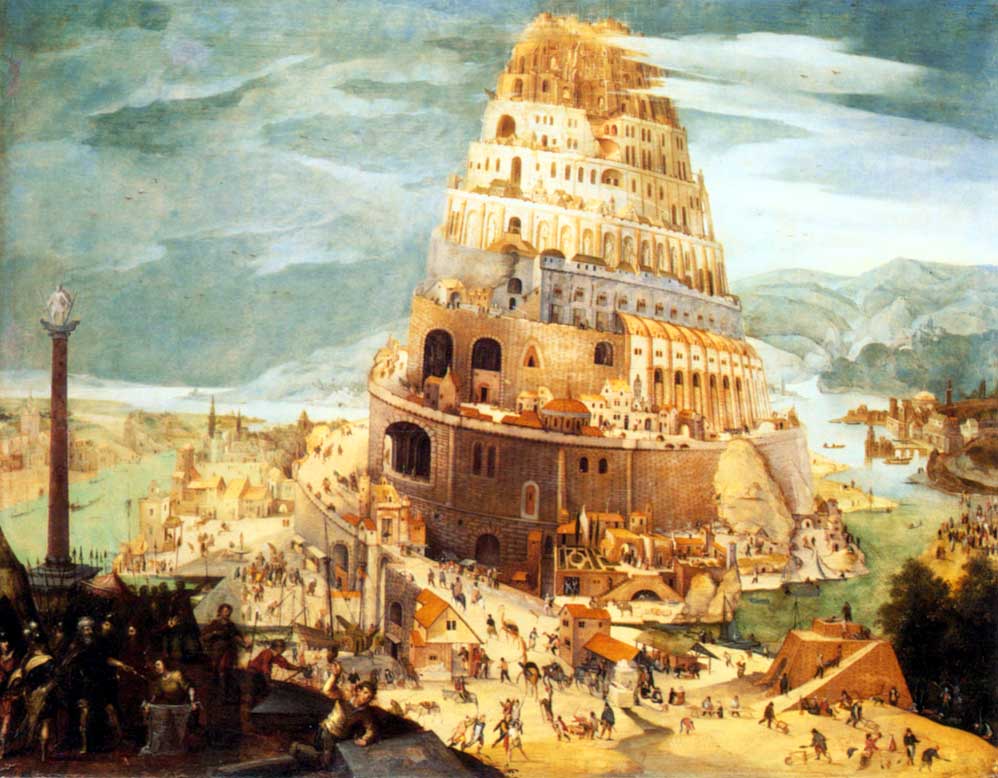
crystal-babel


Apparently, the Robert Schuller empire, symbolized by the Crystal Tower of Babel Cathedral and built by the ultimate ultra-feel good pastor, the one who built a monument to man, whose shimmering building commemorates the gospel of Satan, is about to come crumbling down. One word describes this news:

Good.

It is a good thing that this man-made facade of a church should dissolve into dust. It is a good thing that this empire, built on the lie of universal salvation, should return to the dung heap from which it came. Just like the Tower of Babel, which was built for men to worship the "God" of their own making, so was this abomination of man's making built to worship a fuzzy-wuzzy "God" who is not holy, is not righteous, and is not even real.

tower_of_babel_painting_close1


Once one of the nation's most popular televangelists, the Rev. Robert H. Schuller is watching his life's work crumble.

His son and recent successor, the Rev. Robert A. Schuller, has abruptly resigned as senior pastor of the Crystal Cathedral. The shimmering, glass-walled megachurch is home to the "Hour of Power" broadcast, an evangelism staple that's been on the air for more than three decades.

The church is in financial turmoil: It plans to sell more than $65 million worth of its Orange County property to pay off debt. Revenue dropped by nearly $5 million last year, according to a recent letter from the elder Schuller to elite donors. In the letter, Schuller Sr. implored the Eagle's Club members — who supply 30 percent of the church's revenue — for donations and hinted that the show might go off the air without their support
.

If Robert Schuller continues to preach a God who will save everybody, and that we are not sinners, and that we will all go to heaven--in other words, if he continues preaching a different gospel--then when he dies, he will suffer a much greater fate than watching his private Tower of Babel fall to the ground.

Galatians 1:8-9--But even if we, or an angel from heaven, preach any other gospel to you than what we have preached to you, let him be accursed. As we have said before, so now I say again, if anyone preaches any other gospel to you than what you have received, let him be accursed.